

Why Is My Fruit Tea Pale? A Practical Color Guide
Steep. Sip. Slip into your mood.
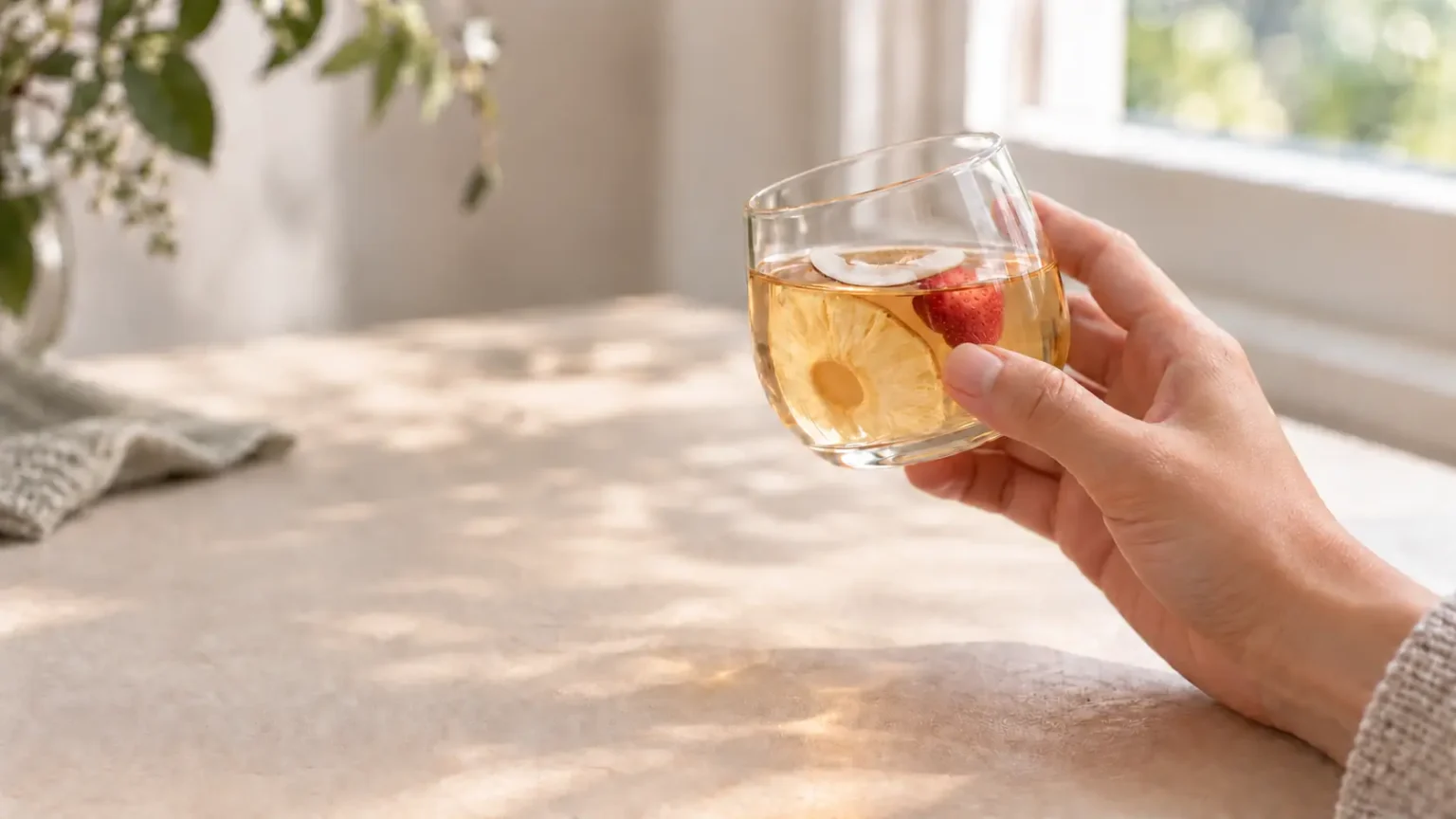
Why is my fruit tea pale? A light-colored cup is not automatically weak or poorly made. Fruit tea color depends on the complete ingredient list, the amount of water, the preparation method, temperature, steeping time, and even the glass and lighting used to view it. Some blends naturally brew pale gold, while hibiscus- or berry-led blends may look pink, red, or deep ruby.
The fairest comparison is not a generic fruit-tea photo. It is the current product label, prepared with the stated serving and water amount. Color can be a useful observation, but it cannot confirm flavor strength, quality, caffeine, nutrition, or safety on its own.
Why Fruit Tea Does Not Have One “Correct” Color
“Fruit tea” is a broad name. One blend may contain dried apple, citrus, pineapple, or berries. Another may include flowers or herbs. A third may combine fruit ingredients with black, green, white, or oolong tea. Those formulas do not begin with the same materials, so they should not be expected to produce the same cup color.
Start with the complete ingredient list. A flavor name or front-of-package image cannot tell you the full formula. Our fruit tea ingredients guide explains how to separate fruit, botanicals, true tea, sweetening ingredients, and flavoring when reading a label.
Bright red fruit tea is visually familiar online, but red is not the universal standard for the category. A pale gold infusion can be normal for its own ingredient mix, just as a deep cup may reflect strongly colored botanicals rather than a stronger flavor.
What Shapes the Color in Your Cup?
1. The Complete Ingredient Mix
Ingredients are the first place to look. Hibiscus and some berry ingredients can contribute pink, red, or ruby tones. Apple-, pear-, pineapple-, coconut-, citrus-, flower-, herb-, and true-tea combinations can produce different shades of yellow, gold, amber, green, brown, or red depending on the exact formula and preparation.
Color is not an ingredient detector. You cannot look at a red cup and prove that it contains hibiscus, or look at a pale cup and conclude that it contains no real fruit. Check the label instead of reverse-engineering the recipe from appearance.
2. Water Ratio
The same serving can look lighter in more water and deeper in less water. That does not mean the best solution is always to reduce the water or add another serving. Begin with the amount stated for the product. If you compare two cups, change only one variable so you know what created the difference.
3. Preparation Time and Temperature
Water temperature and contact time can change how quickly color appears, but fruit-tea formulas vary. Do not borrow a boiling temperature or long steep from an unrelated blend simply to chase a darker cup. Follow the product directions first. If you are unsure whether to simmer or steep, read our guide to boiling, simmering, and steeping fruit tea.
Some plant pigments, including anthocyanins found in certain fruits and flowers, can respond to acidity, temperature, light, oxygen, and the surrounding food system. That science explains why color is context-dependent; it does not let us predict every blend from one ingredient name.
4. Ice and Final Dilution
A warm-brewed tea may look noticeably paler after it is poured over ice because the ice adds water as it melts. Cold brew starts with a different process and should be judged using its own directions. Our cold brew fruit tea vs iced tea comparison explains why two cold drinks can begin differently.
5. Glassware, Background, and Light
A white background makes pale color easier to see. Tinted glass, a dark table, warm indoor bulbs, direct sun, phone white balance, and photo saturation can all change the way the same cup looks. When you compare your tea with an online image, you may be comparing two lighting setups as much as two drinks.
Pale, Dark, or Cloudy: What Can You Actually Conclude?
| What you notice | Useful things to check | What it cannot prove by itself |
|---|---|---|
| Pale color | Complete ingredients, serving-to-water ratio, preparation, and ice dilution | Weak flavor, poor quality, or absence of real fruit |
| Dark color | Strongly colored ingredients, water amount, and preparation conditions | Stronger flavor, more sweetness, more caffeine, or better quality |
| Cloudiness or particles | Fruit pulp, small botanical particles, filtration, and the product’s expected appearance | Spoilage—or safety |
Appearance alone cannot complete a food-safety check. Cloudiness may come from suspended fruit or botanical material, but an unusual appearance should not be automatically dismissed as normal. Check the package, storage history, seal, date, directions, and other warning signs. For dry and prepared-tea handling, use our fruit tea storage guide.
Try a One-Variable Color Check
If the cup looks different from what you expected, a simple side-by-side check is more useful than changing several things at once.
- Keep the product consistent. Use the same blend, the same complete serving, and the same drinking water.
- Make a reference cup. Follow the current label and record the water amount, temperature, and time.
- Change one variable. For the second cup, change only one supported factor, such as the final water amount.
- Control the view. Use matching clear glasses, a white background, and the same natural light.
- Record more than color. Note aroma, taste, body, and finish separately. A darker result is not automatically the better cup.
This is also useful when investigating a cup that smells fruity but tastes unexpectedly light. Color belongs in the observation, but it should not replace tasting or label checks.
How to Judge Fruit Tea Color More Fairly
- Compare the cup with the directions for the exact product, not a generic red-fruit-tea photograph.
- Read the complete ingredients before guessing what created the color.
- Keep water, time, temperature, ice, glassware, and lighting in mind.
- Evaluate aroma, taste, body, and finish separately from appearance.
- Do not use color alone to judge caffeine, sugar, nutrition, additives, quality, or safety.
Frequently Asked Questions
What color should fruit tea be?
There is no universal correct color. The expected shade depends on the full ingredient mix and preparation. Use the product’s own description, label, and directions as the reference.
Does darker fruit tea mean stronger flavor?
No. A darker color may reflect more visible pigment, a different ingredient mix, or a different water ratio. Flavor also depends on aroma, taste, concentration, mouthfeel, temperature, and ingredient balance.
Why does my fruit tea look pale after adding ice?
Melting ice adds water and can make the finished drink look lighter. If the product provides an iced method, follow its water and ice guidance rather than automatically doubling the serving.
Does red fruit tea always contain hibiscus?
No. Hibiscus can contribute red color, but berries and other ingredients may also affect the shade. A cup’s appearance cannot confirm the recipe; read the complete ingredient list.
Is cloudy fruit tea spoiled?
Cloudiness alone cannot prove spoilage or safety. Fruit pulp, fine botanical particles, and filtration can affect clarity. Check the product’s expected appearance, seal, date, directions, and storage history, and do not drink a product with concerning damage, mold, or an unexplained off odor.
A Better Reference Is the Product in Your Hand
Fruit tea color is useful when it prompts the right questions: What is in this blend? Did I use the intended serving and water amount? Was it prepared and stored as directed? A pale cup can be completely appropriate for one formula, while a ruby cup may be normal for another.
Use color as one observation—not a shortcut to quality, flavor, nutrition, or safety. When you are ready to compare ingredient lists and preparation styles, explore the current Cozyslip Fruit Tea collection.