

Why Fruit Tea Tastes Sour: Ingredients and Brewing Checks
Steep. Sip. Slip into your mood.
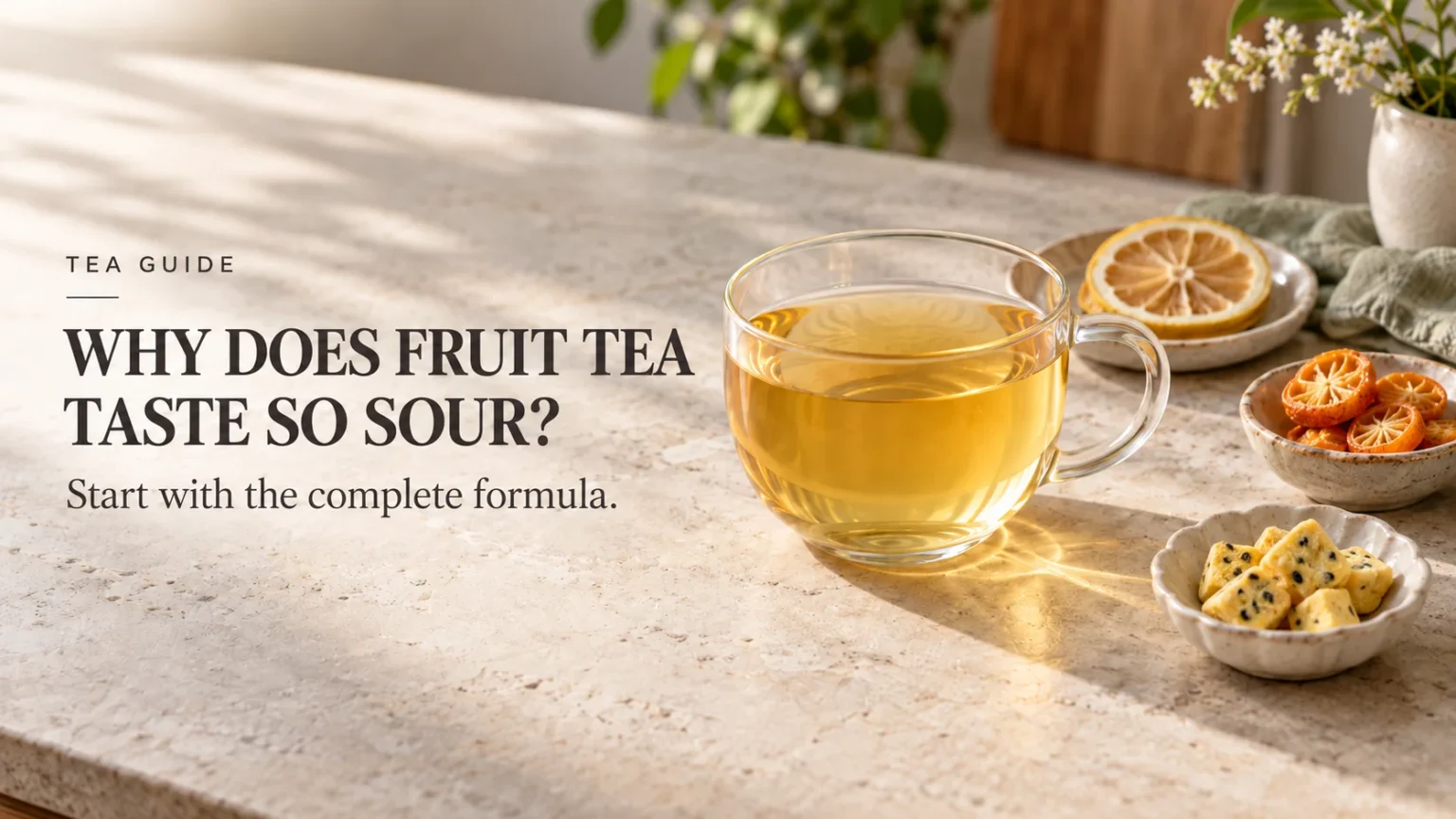
Why fruit tea tastes sour usually comes down to the complete formula, not one ingredient alone. A blend may include naturally tart ingredients such as lemon, lime, kumquat, calamansi, passion fruit, grapefruit, or preserved plum. Water volume, brewing method, sweetness, and serving temperature can also change how tart the finished cup tastes.
Published acidity measurements can help explain why certain fruits are associated with tartness, but they need careful interpretation. A number measured in fresh juice or pulp is not the pH of a freeze-dried fruit piece, a dry serving, or a brewed Cozyslip drink.
The Short Answer: Start With the Whole Formula
A fruit name on the front of a package is only one clue. The complete ingredient list gives a better picture. A tropical blend may combine sweet-smelling pineapple or mango with passion fruit. A citrus blend may contain lemon, lime, kumquat, calamansi, or grapefruit. Preserved plum can introduce another tart-and-salty dimension.
Sweetening ingredients matter too, but the presence of rock sugar does not guarantee that every drinker will find the cup sweet. Sourness and sweetness are perceived together, and the final balance depends on the full serving and how it is prepared.
What Published Acidity Data Says About These Ingredients
The values below describe the samples tested or summarized by the cited sources. They are useful reference points for the raw ingredients—not specifications for a Cozyslip product or brewed cup.
| Ingredient | Published sample | Reported measurement | What it can tell us |
|---|---|---|---|
| Lemon / lime | Lemon or lime juice | pH 2.0–2.60 | The juice itself is acidic. This range cannot be assigned to dried pieces or finished tea. |
| Passion fruit | Raw passion-fruit juice | pH 2.9; titratable acidity 3.72 ± 0.06 g citric acid/100 mL in one study sample | Passion fruit can contribute a tart background; its effect in a blend depends on amount and extraction. |
| Kumquat | Fresh kumquat fruit | Published pH range 3.18–3.47 | Kumquat is acidic, but cultivar, maturity, and peel-to-pulp ratio can change the result. |
| Calamansi | Processed calamansi juice samples | pH 2.10–2.26; titratable acidity 0.512–0.922% | Calamansi can bring clear citrus tartness. These values belong to the studied juice samples. |
Kumquat and calamansi are not interchangeable names. They are listed separately here because the published measurements come from different fruits and sample conditions.
Why pH Is Not a Sourness Score
pH and titratable acidity measure different things. pH reflects hydrogen-ion activity, while titratable acidity describes how much base is needed to neutralize the acids in a sample. Neither number, on its own, perfectly predicts how sour a person will find a drink.
Aroma, sugar, other fruit components, dilution, temperature, and individual perception all affect the experience. That is why the figures above should not be used to rank Cozyslip blends from “least sour” to “most sour.” Such a ranking would require standardized preparation and direct measurements of the finished drinks.
Why Raw-Fruit Numbers Are Not Brewed-Tea Numbers
Most published fruit measurements use fresh juice, pulp, or processed juice. Cozyslip blends use dried or freeze-dried ingredients in complete formulas. Drying, ingredient weight, rehydration, water volume, temperature, time, and rock sugar can all change the finished drink.
For example, Rose Citrus Bloom includes orange, calamansi, and passion fruit; Pineapple Mango includes passion fruit; and Salted Lemon includes lemon, green kumquat, and preserved plum. These ingredient combinations help explain where tart notes may come from, but the fresh-fruit figures above do not reveal the pH or exact acid content of any of these cups. Always use the current product label as the final ingredient reference.
How to Check Your Cup
- Read the full ingredient list. Look for lemon, lime, kumquat, calamansi, passion fruit, grapefruit, or preserved plum rather than judging by the product name alone.
- Use the labeled water amount. Less water can make the entire blend more concentrated; extra water changes the intended balance.
- Prepare the complete serving as directed. Do not estimate the finished drink from the pH of one fresh fruit.
- Change only one variable at a time. If the label allows an adjustment, keep the serving, vessel, and other conditions consistent so you know what changed.
- Check the package if something seems abnormal. A damaged seal, unsuitable storage, visible mold, or an unexplained off odor is not a flavor-balancing problem. Do not try to cover it with sweetener.
What a Sour Cup Does Not Prove
- It does not automatically mean the product is spoiled.
- It does not tell you whether the blend contains caffeine.
- It does not prove a high vitamin C content.
- It does not mean the product is more natural or higher quality.
- It does not mean you must add a large amount of sugar.
Frequently Asked Questions
Why does fruit tea taste sour even when it contains rock sugar?
Rock sugar is one part of the formula. Citrus, passion fruit, preserved plum, water volume, and preparation can still make tartness noticeable. The ingredient list alone does not provide enough information to calculate the final balance.
Can I use pH to predict which fruit tea will taste most sour?
No. Published pH values often describe fresh juice or pulp, while a fruit-tea blend uses different ingredients and preparation conditions. pH is also not the same as titratable acidity or perceived sourness.
Are kumquat and calamansi the same ingredient?
No. They are distinct citrus fruits. Product labels and acidity references should identify them separately.
How can I make fruit tea taste less sour?
First confirm that you used the complete serving and the labeled water amount and method. If the product directions permit adjustment, change one variable at a time rather than adding several ingredients at once. Do not use flavor changes to disguise signs of package damage or spoilage.
Does sour fruit tea mean it has gone bad?
Not by itself. Tart fruits can naturally taste sour. Check the seal, date, storage history, appearance, and odor. Do not drink a product with concerning damage, mold, or an unexplained off odor.
Read the Formula, Then Brew the Cup
Understanding why fruit tea tastes sour starts with reading the complete formula and following the labeled preparation method. Published raw-fruit numbers provide context, but they are not a measurement of your finished drink.
Explore Cozyslip fruit tea blends and compare the current labels before choosing your next cup.