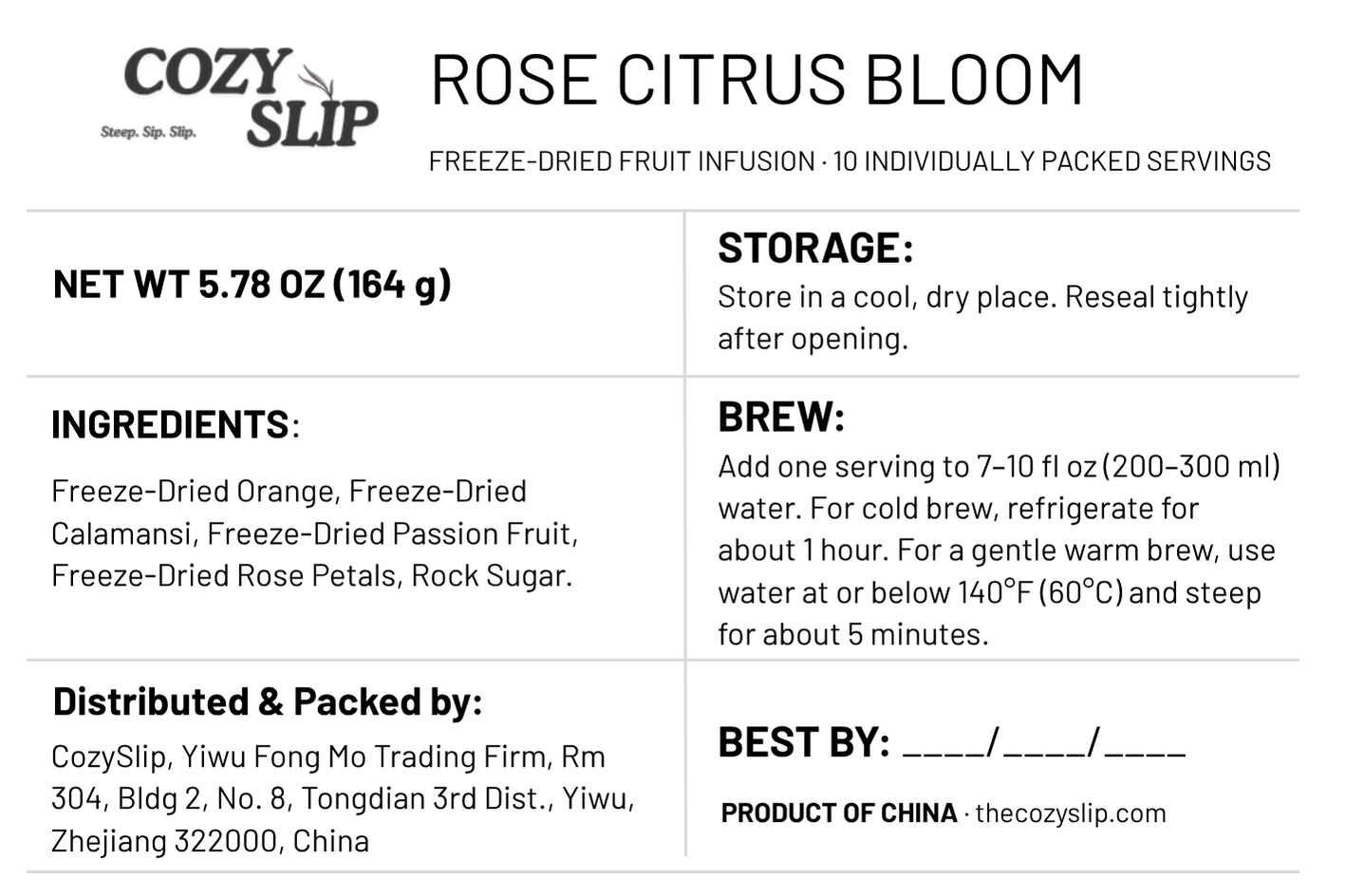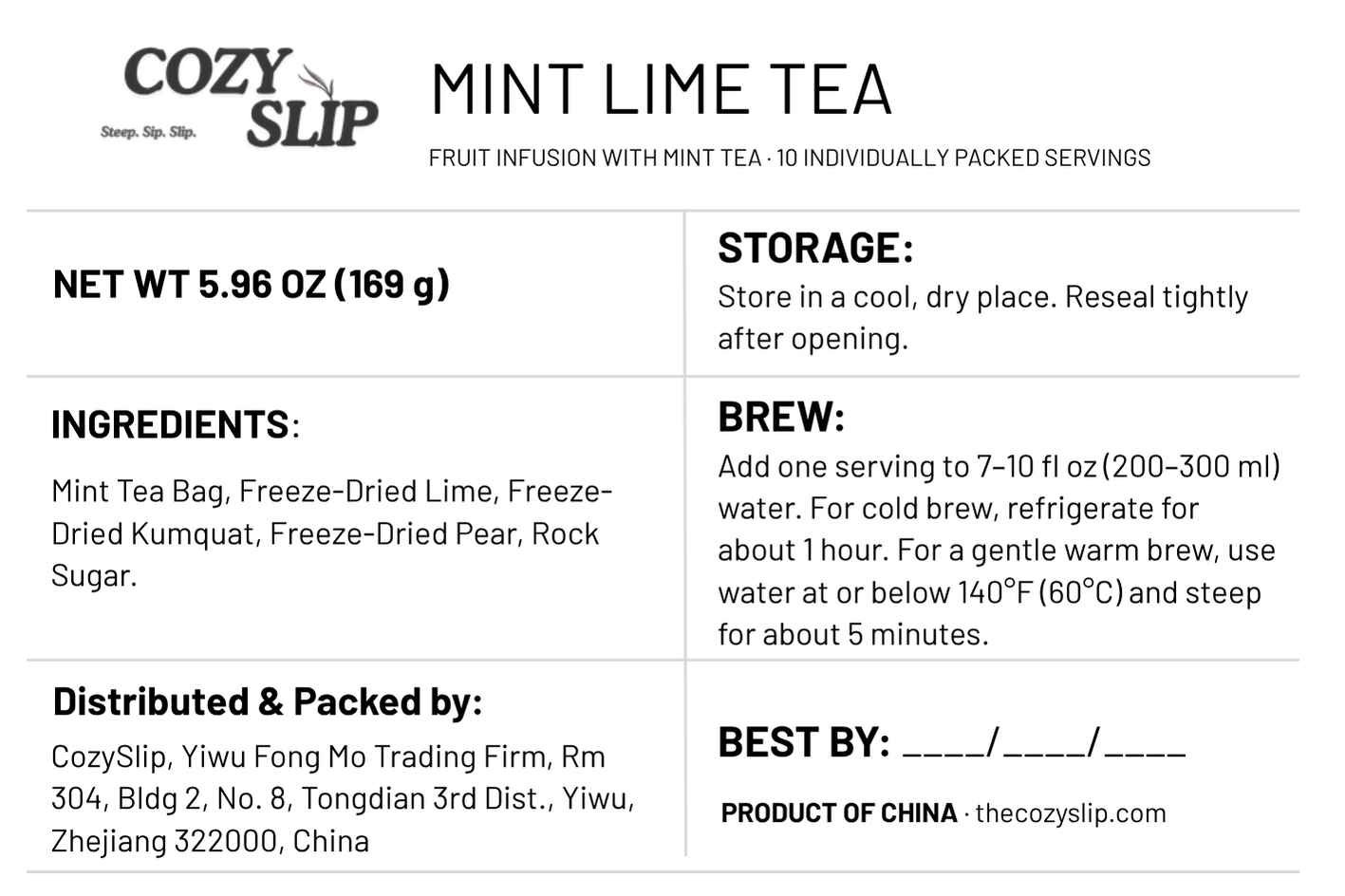


Some fruit teas contain caffeine; others are caffeine-free. The complete ingredient list, including any separate tea bag, determines the answer. Look for black or green tea and other caffeine sources rather than relying on the fruit name. Cozyslip Rose Citrus Bloom has no tea leaves and is caffeine-free based on its confirmed formula. Apple Orange Ember is labelled Contains Caffeine. For other blends, check the current ingredients and caffeine statement.
Most fruit tea is caffeine-free. Fruit pieces, flowers and herbs contain no caffeine at all. Caffeine only appears when a blend includes real tea leaves — black, green, white or oolong — or another caffeine source such as guarana. The ingredient list, including any separate tea bag, always decides.
The short answer
Pure fruit tea — dried fruit and botanical pieces with no tea leaves — has no caffeine. Fruit tea built on black, green or white tea leaves does contain caffeine, because caffeine comes from the tea leaf, never from the fruit. At Cozyslip, the blends are fruit infusions; the only one that contains caffeine is Apple Orange Ember, which comes with a separate black tea bag — Rose Citrus Bloom, for example, has no tea leaves and is caffeine-free.
Key Facts at a Glance
- Black, green, white and oolong tea, including matcha, are caffeine sources.
- Other ingredients, such as yerba mate or guarana, can also contribute caffeine; a blend without traditional tea can still contain caffeine.
- Fruit and herbal infusions may be naturally caffeine-free. Check the complete formula, including the separate tea bag, before deciding.
- Decaffeinated tea and naturally caffeine-free infusions are different: decaffeination does not necessarily remove all caffeine.
Why the Name “Fruit Tea” Can Be Confusing
Fruit tea can mean a fruit-and-herbal infusion, a fruit-flavoured black or green tea, or a mixture of both. It is not a standardised tea category, so the name alone does not settle the caffeine question. Check the full ingredients for the specific product, including any separate tea bag, before you decide. For naming examples, the fruit tea vs fruit infusion guide explains the naming differences.
| Type | What to look for | Caffeine answer |
|---|---|---|
| Fruit or herbal infusion | Fruit, flowers or herbs; check for additional caffeine sources | May be naturally caffeine-free |
| Fruit-flavoured true tea | Black, green, white or oolong tea, or matcha | Contains caffeine unless processed otherwise; decaf is not the same as caffeine-free |
| Mixed blend | Fruit and herbs with true tea or another caffeine source | Depends on the complete formula |
The Ingredient-First Caffeine Check
1. Look for True Tea Leaves
Black, green, white and oolong tea come from Camellia sinensis. Matcha is a form of green tea. These ingredients naturally contain caffeine. See NCCIH’s introduction to tea.
2. Check Other Caffeine Sources
Read beyond the tea name. Yerba mate, guarana, kola nut, cocoa or added caffeine can change the answer. A blend can contain caffeine even when fruit is the first word in its name. The FDA’s caffeine guide explains natural and added caffeine sources.
3. Separate “Caffeine-Free” From “Decaffeinated”
A naturally caffeine-free infusion uses ingredients without caffeine. Decaffeinated tea starts with caffeinated tea and may retain some caffeine. For more on infusion ingredients, see the UK Tea & Infusions Association’s infusion FAQs.
Our guide to passion fruit tea ingredients and tea bases shows why a fruit name alone cannot identify the base of a drink.
Which Cozyslip Fruit Teas Have Caffeine?
Start with the exact blend. Rose Citrus Bloom and Apple Orange Ember have the confirmed classifications shown below. For the other blends, use the current package ingredients and caffeine statement before deciding. This table gives no caffeine amount for any blend.
| Blend | Ingredient record | Caffeine status |
|---|---|---|
| Rose Citrus Bloom | The ingredient record lists orange, calamansi, passion fruit and rose petals; no tea leaves. | Caffeine-free, based on confirmed formula. |
| Grapefruit Mint Lift | The ingredient record lists grapefruit, lemon and Mint Tea. | Check the current ingredients and caffeine statement. |
| Papaya Dragonfruit Glow | The ingredient record lists papaya, red dragon fruit and lemon. | Check the current ingredients and caffeine statement. |
| Apple Orange Ember | The ingredient record lists apple, orange, lime and black tea. | Contains Caffeine, as labelled. |
| Strawberry Pineapple Coconut Breeze | The ingredient record lists pineapple, lemon, strawberry and coconut. | Check the current ingredients and caffeine statement. |
| Kiwi Citrus Fruit Party | The ingredient record lists pineapple, grapefruit, orange and kiwi. | Check the current ingredients and caffeine statement. |
| Strawberry Apple Fruit Tea | The ingredient record lists strawberry, lemon, apple and calamansi. | Check the current ingredients and caffeine statement. |
| Mint Lime Tea | The ingredient record lists Mint Tea Bag, lime, kumquat and pear. | Check the current ingredients and caffeine statement. |
These conclusions apply to the eight blends shown, not every Cozyslip product or every fruit tea.
Read the current package, not just the flavour name. See our guide to does fruit tea have sugar for the separate question of whether a fruit tea contains sugar.
How Much Caffeine Is in Fruit Tea?
There is no single caffeine amount for all fruit teas. For Cozyslip Apple Orange Ember, the printed label states Contains Caffeine and does not specify an amount. This guide does not assign a numerical caffeine value to any Cozyslip blend or substitute a general black tea estimate for a product-specific figure.
Do Fruits Themselves Contain Caffeine?
Almost none. The fruits you eat every day — apples, strawberries, citrus, mango, grapes — contain no caffeine, and neither do the dried fruit pieces in fruit tea. Plants make caffeine mostly in their seeds or leaves, not in their fruit. The exceptions are unusual ones: guarana berries, whose seeds are among the richest natural caffeine sources; coffee cherries, the fruit that grows around coffee beans; and cacao pods, whose seeds become cocoa and chocolate and carry a mild lift from caffeine and theobromine. The kola nut, another traditional source, is a seed rather than a fruit. So when a fruit tea does contain caffeine, it never comes from the fruit. It comes from real tea leaves, or an added source such as guarana — which is why the ingredient check above settles the question.
What About Bubble Tea, Bottled Fruit Tea, and Café Drinks?
Use the same ingredient-first check. A fruit-flavoured café drink may have a black or green tea base, added syrup or a separate caffeine source. Read the full menu description and ingredient list for that drink, not just the fruit name.
Does Cold Brewing Change Whether Fruit Tea Has Caffeine?
No. Cold brewing does not make a caffeinated blend caffeine-free. Start with its ingredients, then follow the preparation directions for that specific product. A caffeine-free formula is not, by itself, confirmation that a product is suitable for cold-water preparation.
To compare blends, read how to choose fruit tea for cold brewing. For preparation guidance, use our fruit tea cold-brew guide alongside the current package directions.
Choose by Ingredients, Then by Mood
For a naturally caffeine-free option, choose Rose Citrus Bloom, which is caffeine-free based on its confirmed fruit-and-rose formula. For fruit with a caffeine source, check Apple Orange Ember, which is labelled Contains Caffeine. For the other six blends, check the current ingredients and caffeine labelling for each blend before you choose.
Browse Cozyslip fruit tea ingredients.
Frequently Asked Questions
Do fruit teas have caffeine?
It depends on the base. A pure fruit infusion — fruit and botanical pieces only — has no caffeine. A fruit-flavoured black, green or white tea contains caffeine from its tea leaves.
Is there caffeine in fruit tea made only with dried fruit?
A fruit-only infusion may be naturally caffeine-free, but check the complete formula. A product called fruit tea can include a separate tea bag or another caffeine source.
Does herbal fruit tea have caffeine?
Many fruit and herbal infusions are naturally caffeine-free. Blends containing true tea, mate, guarana or another caffeine source can contain caffeine, so read all the ingredients.
Is decaf fruit tea caffeine-free?
Not necessarily. Decaffeinated true tea may retain some caffeine. Decaf and naturally caffeine-free describe different products.
Does cold brewing remove caffeine?
No. Cold brewing does not turn a blend containing a caffeine source into a caffeine-free drink. Follow the specific product’s preparation directions.
Does a separate tea bag always mean caffeine?
No. A separate tea bag does not always mean caffeine. Mint Lime Tea and Grapefruit Mint Lift include a separate mint tea bag, and the table above uses the current ingredients and caffeine labelling for each blend rather than treating a separate tea bag as proof of caffeine. Check the full ingredients and any printed caffeine statement for the specific blend.
How much caffeine is in fruit tea?
For a pure fruit infusion, 0 mg — there is no caffeine source in it. For tea-leaf-based fruit teas, the amount varies with the leaf and the brew, so check that maker’s label.
Is fruit tea caffeine-free?
Pure fruit infusions are naturally caffeine-free, which is why they work in the evening. Blends that include real tea leaves are not — the fruit flavour does not remove the caffeine.
Does Apple Orange Ember’s label state a caffeine amount?
No. It states Contains Caffeine without specifying an amount. This guide does not assign the product a numerical caffeine value.
Is Rose Citrus Bloom caffeine-free?
Yes, based on its confirmed fruit-and-rose formula. It does not include true tea or another caffeine source in its printed ingredients, and its label does not print a caffeine statement.
Is Apple Orange Ember caffeine-free?
No. Apple Orange Ember is labelled Contains Caffeine. It includes black tea in its printed ingredients.
Are the other six Cozyslip fruit teas caffeine-free?
Do not treat them as confirmed caffeine-free. Check the current ingredients and caffeine labelling for each blend before you choose, rather than relying on the flavour name alone.
Sources and Label Notes
The blend table follows Cozyslip’s printed ingredient labels reviewed on October 27, 2026. Rose Citrus Bloom’s caffeine-free classification follows its confirmed formula; its label has no printed caffeine field. Apple Orange Ember’s caffeine statement is transcribed as Contains Caffeine. Ingredient-based classifications are not laboratory test results.
For examples of the printed ingredient panels, view the Rose Citrus Bloom label, Strawberry Apple Fruit Tea label and Mint Lime Tea label. The general tea and caffeine references are linked beside the explanations above; they do not establish caffeine values for Cozyslip products.