

Fruit Tea vs Fruit Infusion vs Herbal Tea
Steep. Sip. Slip into your mood.
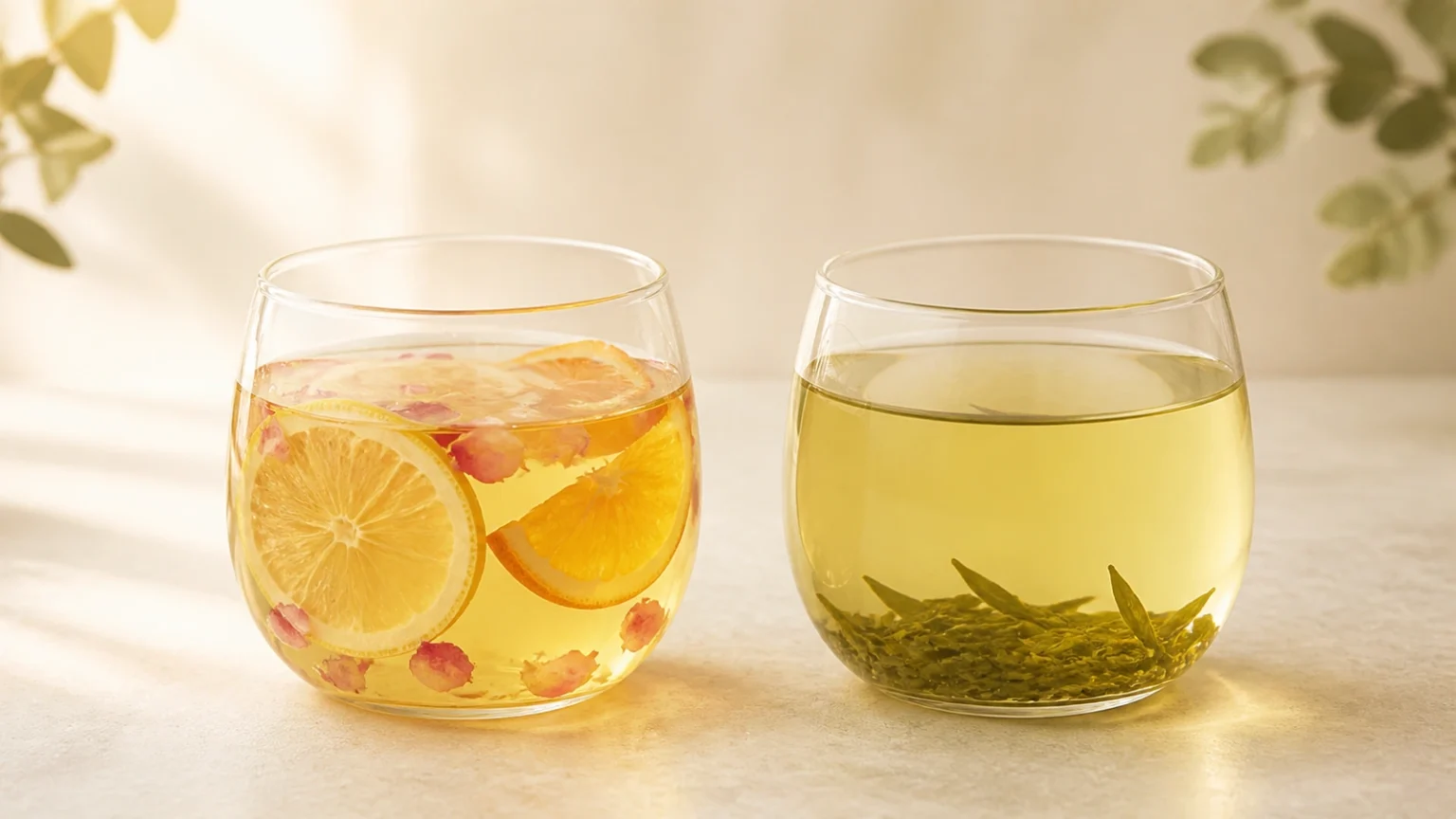
Fruit tea vs fruit infusion is often a difference in naming rather than one universal recipe. In everyday shopping, both terms may describe a drink made by steeping fruit, flowers, herbs, peels, or spices in water. The useful question is not only what the front of the package calls it, but what ingredients are actually inside.
The short version
- Fruit infusion: usually emphasizes fruit and other botanicals steeped in water.
- Herbal tea: a familiar market term for an infusion made without traditional tea leaves, although recipes vary.
- Fruit tea: may mean a fruit infusion, or it may mean black, green, white, or oolong tea blended or flavored with fruit.
- True tea: comes from Camellia sinensis and naturally contains caffeine.
Fruit Tea vs Fruit Infusion at a Glance
| Label term | Common meaning | Could contain true tea? | Best next step |
|---|---|---|---|
| Fruit infusion | Fruit, flowers, herbs, peels, or spices infused in water | Sometimes, if it is a blend | Read the full ingredients |
| Herbal tea | A botanical infusion that is not necessarily made from the tea plant | A mixed blend can | Check for tea leaves and other caffeine sources |
| Fruit tea | Either a fruit-led infusion or true tea with fruit | Yes | Do not decide from the flavor name alone |
| True tea | Black, green, white, or oolong tea from Camellia sinensis | It is true tea | Expect caffeine unless specifically decaffeinated |
What Is a Fruit Infusion?
A fruit infusion is made by placing fruit and sometimes flowers, herbs, peels, or spices in water so that their color, aroma, and flavor move into the drink. The UK Tea & Infusions Association explains that herbal and fruit infusions are made from plant materials other than the traditional tea plant, although mixed blends may also include true tea.
The word infusion describes the preparation more precisely than the casual word tea. It does not, however, guarantee one standard recipe. One fruit infusion may be mostly apple and citrus; another may include flowers, mint, spices, sweetening ingredients, or a separate tea bag.
Why Is It Still Called Fruit Tea?
“Fruit tea” is an easy phrase for shoppers to recognize, so it is used broadly. Sometimes it means a caffeine-free fruit-and-herb infusion. Sometimes it means black or green tea with fruit pieces or fruit flavor. Both uses appear in the market.
That overlap is why a package name such as peach tea, apple tea, or citrus tea cannot tell you the tea base by itself. Look beneath the flavor name.
Is Herbal Tea the Same as Fruit Infusion?
They overlap, but they are not perfect synonyms. “Herbal tea” is a broad everyday category that can include leaves, flowers, roots, seeds, spices, and fruit. “Fruit infusion” puts fruit at the center of the description. A blend can reasonably fit both descriptions.
The term tisane is another name often used for non-tea botanical infusions. It can sound more technical, but it still does not replace reading the ingredients.
Three Things to Check Before You Choose
1. Check the base
Look for black tea, green tea, white tea, oolong tea, or matcha. These ingredients come from Camellia sinensis and naturally contain caffeine. If caffeine matters to you, use our ingredient-first caffeine guide.
2. Check the visible and listed ingredients
Fruit pieces, flowers, herbs, spices, flavorings, and sweetening ingredients can all change what the finished cup is like. Visible fruit can help you understand the product, but the written ingredient list remains the source of truth.
3. Check the preparation directions
Do not assume every fruit or herbal infusion is designed for cold-water brewing. Follow the package directions. Products specifically labeled for cold preparation may use a different method from infusions intended to begin with freshly boiled water.
Where Does Freeze-Dried Fruit Tea Fit?
Freeze-dried fruit tea describes the form of some ingredients, not a completely separate beverage family. A product may use freeze-dried fruit in a fruit infusion, or combine that fruit with herbs, flowers, or true tea. Read what freeze-dried fruit tea means for a closer look at this product format.
The Simplest Shopping Rule
Use the product name to find the flavor family. Use the ingredient list to understand the drink. Then use the preparation directions to make it correctly.
Cozyslip’s fruit tea collection includes individually packed combinations with visible fruit and other listed ingredients. Because formulas differ, each product page should be checked for its current ingredients and preparation method.
Explore the Cozyslip Fruit Tea Collection