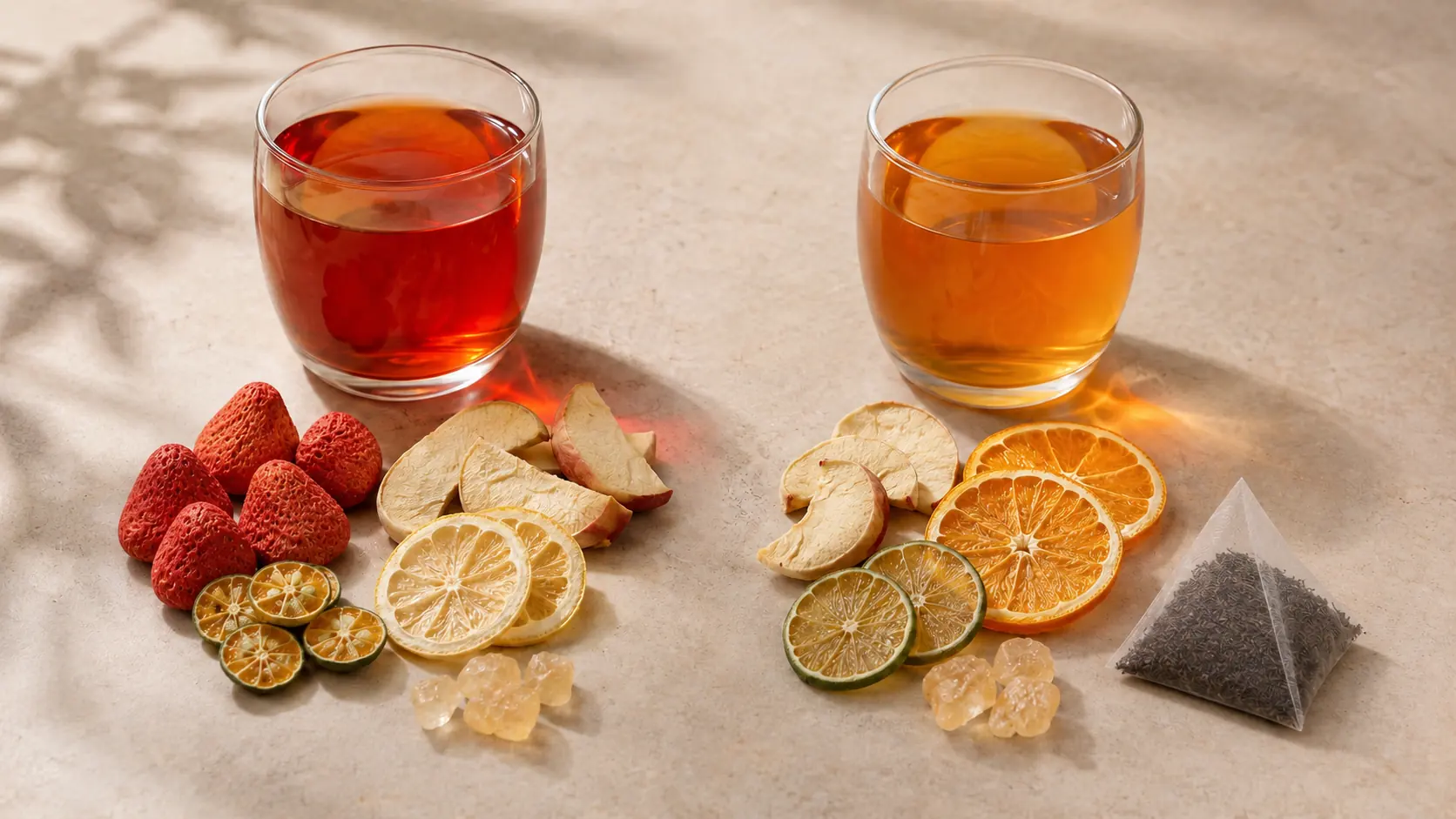

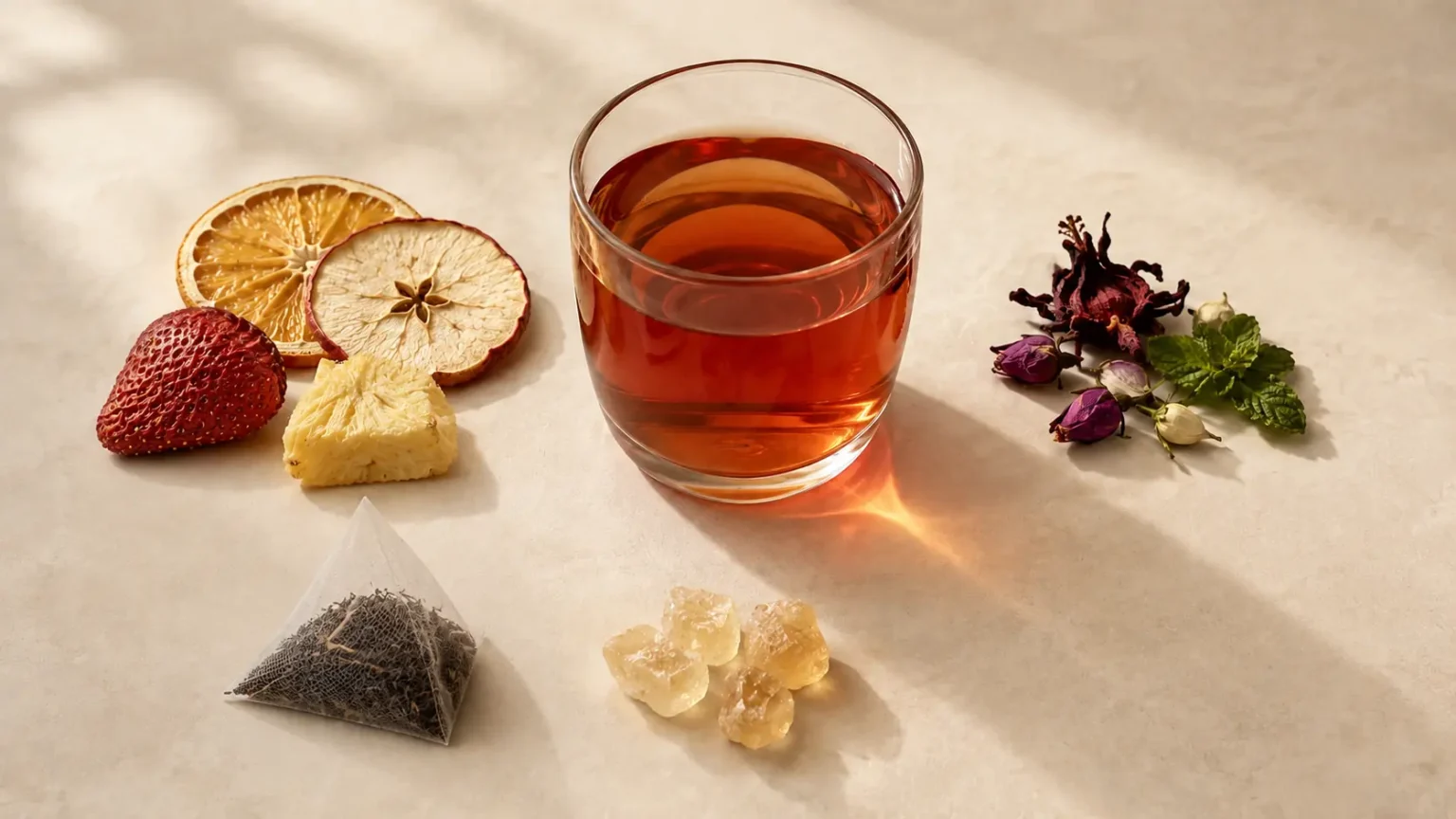
Fruit tea ingredients can include dried fruit, flowers, herbs, true tea leaves, sweetening ingredients, and flavoring—but there is no single formula used by every product. The fastest way to understand a blend is to read the complete ingredient list, then check the caffeine note and Nutrition Facts when they are available.
The Short Answer
Start with five questions: What provides the fruit character? Are flowers or herbs included? Is there black, green, white, or oolong tea? Is a sweetening ingredient listed? Does the label mention flavoring? Those answers tell you more than the flavor name alone.
Key Facts at a Glance
- Fruit tea has no universal formula.
- Black, green, white, and oolong tea are true teas and naturally contain caffeine.
- Dried fruit and an added sweetening ingredient are different label categories.
- Freeze-dried describes processing; it does not prove a nutrient result.
- The complete ingredient list and product-specific directions are the final reference.
Five Common Fruit Tea Ingredient Groups
| Ingredient group | What you may see | What to check next |
|---|---|---|
| Fruit | Apple, strawberry, citrus, berries, pineapple, mango, or other dried fruit pieces | Whether the named fruit appears in the complete ingredient list |
| Flowers and herbs | Hibiscus, rose, chrysanthemum, mint, lemongrass, or other botanicals | Whether they are the base or a supporting ingredient |
| True tea | Black, green, white, or oolong tea | These come from Camellia sinensis and naturally contain caffeine |
| Sweetening ingredients | Rock sugar, cane sugar, honey, syrup, or another listed sweetener | Check the ingredient list and Added Sugars line when provided |
| Flavoring and additions | Natural flavor, spices, peel, or supporting ingredients | Do not treat the front image as the complete formula |
Read the Ingredient List in Order
For packaged foods in the United States, ingredients are generally listed in descending order of predominance by weight. The first ingredient contributes the greatest weight before processing, followed by ingredients used in smaller amounts. This order helps explain the structure of a blend, but it does not predict the exact flavor intensity of the brewed cup.
Read every line rather than stopping at the first fruit name. A blend can combine visible fruit with flowers, herbs, true tea, a sweetening ingredient, or flavoring.
Fruit Does Not Answer the Caffeine Question
Black, green, white, and oolong tea all come from Camellia sinensis and naturally contain caffeine. A product can look fruit-forward and still contain true tea.
Apple Orange Ember is a practical example: its serving includes freeze-dried fruit, rock sugar, and a separate black tea bag. The black tea means the prepared drink contains caffeine. Because there is no laboratory result for this finished SKU, Cozyslip does not assign it a verified customer-facing milligram value.
Use our full fruit tea caffeine guide when caffeine is part of your decision.
Fruit Sugar and Added Sweeteners Are Different Questions
Fruit naturally contains sugars, while rock sugar, cane sugar, honey, and syrups are sweetening ingredients added to a formula. The FDA Nutrition Facts label separates Total Sugars from Added Sugars for packaged foods that require those declarations.
Do not assume that visible fruit means a prepared drink is sugar-free, and do not assume that every fruit blend contains an added sweetener. Check the complete ingredients and current Nutrition Facts information. Read Does Fruit Tea Have Sugar? for the fuller explanation.
What Does Freeze-Dried Mean Here?
Freeze-dried describes a processing format, not a health promise. Cozyslip’s current fruit tea line from its confirmed supplier uses freeze-dried fruit ingredients. That statement does not prove a nutrient-retention percentage, and it does not replace the formal ingredient list for each product.
A Five-Step Fruit Tea Label Check
- Find the complete ingredients. Do not rely only on the product name or front image.
- Identify the base. Look for fruit, flowers, herbs, or true tea.
- Check caffeine sources. Black, green, white, and oolong tea contain caffeine.
- Look for sweetening ingredients. Compare Added Sugars when available.
- Read the preparation directions. Use the method written for that product.
How Cozyslip Fruit Tea Ingredients Vary
Cozyslip fruit teas are not one repeated formula. Some servings pair freeze-dried fruit with flowers or herbs. Some include rock sugar. Apple Orange Ember includes a separate black tea bag and therefore contains caffeine. Strawberry Apple Fruit Tea uses a fruit-and-rock-sugar formula without a traditional tea bag in the currently confirmed product record.
Open the current product page before ordering because exact ingredients, caffeine note, sweetening ingredients, and preparation directions belong to the individual product. You can browse the Cozyslip Fruit Tea collection or use our guide on how to choose fruit tea flavors.
Frequently Asked Questions
What ingredients are usually in fruit tea?
Fruit tea may contain dried fruit, flowers, herbs, true tea leaves, sweetening ingredients, spices, or flavoring. There is no universal formula, so read the complete ingredient list.
Does fruit tea contain real tea leaves?
Sometimes. Some fruit teas are fruit or botanical infusions, while others contain black, green, white, or oolong tea.
Do fruit tea ingredients contain caffeine?
Fruit itself does not answer the question. A blend containing black, green, white, or oolong tea contains caffeine; a complete fruit-and-botanical formula without a caffeine source may be naturally caffeine-free.
Is dried fruit the same as added sugar?
No. Fruit naturally contains sugars, while rock sugar, cane sugar, honey, and syrups are added sweetening ingredients.
Does freeze-dried fruit guarantee more nutrients?
No specific nutrient result should be assumed from the processing term alone. A verified nutrition claim requires product-specific evidence.
Sources and Label Notes