

Fruit Tea vs Green Tea vs Black Tea: What’s the Difference?
Steep. Sip. Slip into your mood.
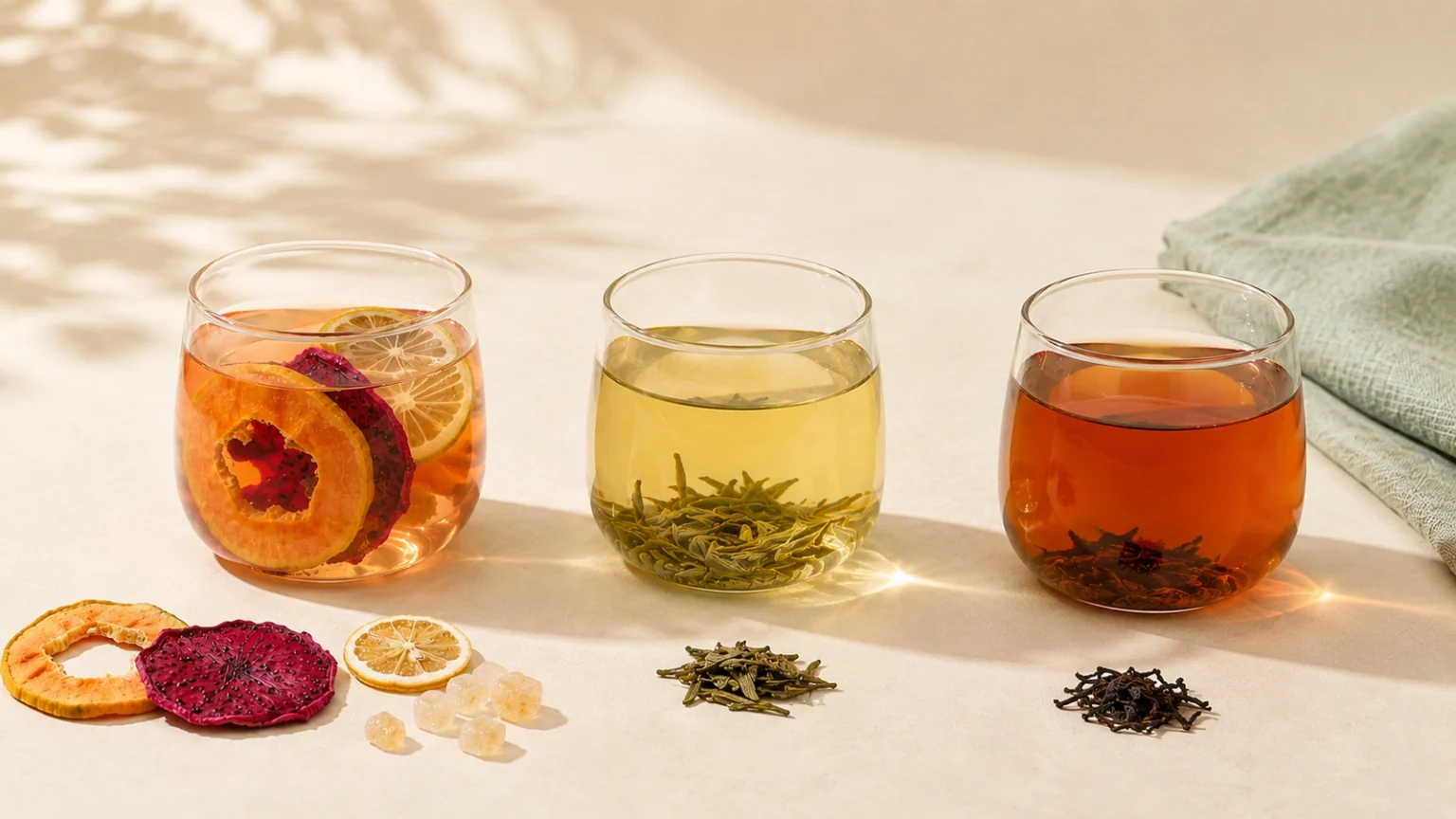
Fruit tea vs green tea is not a one-to-one comparison—and black tea adds a third distinct option. Green and black tea both come from the Camellia sinensis plant but are processed differently.
The Short Answer
Choose by the base. Pick a fruit infusion when you want fruit and botanical flavors and the ingredients fit your caffeine preference. Choose green tea for a lighter, often more vegetal true-tea profile. Choose black tea for a fuller, often brisker true-tea base. If a fruit tea contains green or black tea, it belongs in both categories—and it contains caffeine.
Key Facts at a Glance
- Green tea and black tea are true teas made from the same plant, Camellia sinensis.
- Different processing methods help create their different color, aroma, and flavor profiles.
- Green and black tea naturally contain caffeine; the exact amount varies by product, serving size, and preparation.
- “Fruit tea” can mean a fruit-and-herbal infusion or a true tea blended with fruit.
- A fruit-only name, red color, or sweet aroma does not prove that a drink is caffeine-free or sugar-free.
- Follow the directions for the specific blend instead of using one temperature and steeping time for every tea.
Fruit Tea vs Green Tea vs Black Tea: Side-by-Side
| Comparison | Fruit tea | Green tea | Black tea |
|---|---|---|---|
| Base | May be fruit, flowers, herbs, spices, true tea, or a combination | Camellia sinensis leaves processed as green tea | Camellia sinensis leaves processed as black tea |
| Caffeine | Depends on the complete formula | Naturally contains caffeine | Naturally contains caffeine |
| Common flavor direction | Fruity, tart, floral, spiced, or sweet-seeming; varies widely | May be grassy, vegetal, nutty, marine, or lightly sweet | May be brisk, malty, toasty, fruity, or full-bodied |
| Brewing sensitivity | Varies with fruit pieces, herbs, sweeteners, and any tea component | Often less forgiving of very hot water or long steeping | Often brewed hotter, but can still become astringent when over-steeped |
| Choose it when | You want a fruit-forward cup and can verify the ingredients you prefer | You want a lighter true-tea profile | You want a stronger, more structured true-tea base |
These are useful category patterns, not guarantees of one exact flavor or caffeine level. Origin, cultivar, particle size, blend, amount of tea, water, temperature, and time can all change the cup.
Why “Fruit Tea” Is the Confusing Category
Green tea and black tea have a botanical definition: both come from Camellia sinensis. Fruit tea does not have one equally narrow formula in everyday retail language.
One fruit tea may be an infusion of apple, citrus, hibiscus, mint, or other botanicals without any traditional tea leaves. Another may be black tea with peach or orange. A third may combine fruit pieces with a separate green or black tea bag. These drinks can all look fruit-forward on a product page while behaving differently in the cup.
If you want the naming distinction in more detail, read our guide to fruit tea vs fruit infusion. The practical rule is simple: treat “fruit tea” as a description to investigate, not a complete ingredient answer.
How Green Tea and Black Tea Differ
The National Center for Complementary and Integrative Health explains that green, black, oolong, and white teas all come from Camellia sinensis and are produced using different methods. Processing changes the leaf and helps shape the final color, aroma, flavor, and level of astringency.
Black tea is more fully oxidized than green tea. In ordinary tasting language, that often gives black tea a darker color and a fuller or brisker profile. Green tea is processed to limit oxidation, so it may keep fresher, more vegetal, grassy, nutty, or marine notes. “Often” matters here: a delicate black tea and a roasted or shade-grown green tea can challenge the simplest stereotypes.
Neither category is one flavor. Region, season, cultivar, leaf grade, storage, and preparation all matter. That is why this guide compares useful tendencies rather than declaring that every green tea is mild or every black tea is strong.
Which One Has Caffeine?
Green tea and black tea naturally contain caffeine. Fruit tea may or may not. A fruit-and-herbal infusion made without a caffeine source may be naturally caffeine-free, while a fruit tea that contains black, green, white, or oolong tea contains caffeine. Other ingredients can contribute caffeine too.
The U.S. Food and Drug Administration publishes representative category values, but it also stresses that the amount in a specific product and serving can vary. A category average is not a laboratory result for the tea in your cup. For a more complete ingredient check—including other caffeine sources and the difference between “decaf” and “caffeine-free”—use our fruit tea caffeine guide.
If green tea is your main question, our green tea caffeine and L-theanine guide goes deeper without turning this comparison into a second caffeine article.
Can You Tell by Color, Taste, or the Word “Fruit”?
No. A red or pink infusion may get its color from hibiscus, berries, or another botanical and still need a full label check. A pale drink can contain green tea and caffeine. A sweet aroma does not prove that sugar was added, and a tart flavor does not prove that the product is unsweetened.
Use this order instead:
- Read the full ingredient list. Look for green, black, white, or oolong tea, matcha, and any other stated caffeine source.
- Check for a separate component. Some fruit servings include a separate tea bag that is easy to miss in a short product description.
- Review the serving and preparation directions. Cup size and brewing method affect the finished drink.
- Use product-specific facts. Do not transfer a claim from one flavor to an entire collection.
Our fruit tea ingredient guide explains how to read the rest of the formula, including fruit pieces, botanicals, sweetening ingredients, and tea bases.
A Cozyslip Example: Fruit and Black Tea in One Serving
Cozyslip Apple Orange Ember shows why a three-way comparison is more useful than a simple label. Its confirmed serving structure includes freeze-dried apple, orange, lime, rock sugar, and a separate black tea bag. It is fruit-forward, but it is also a black-tea drink and therefore contains caffeine.
The fruit does not cancel the tea base, and the black tea does not make the fruit pieces irrelevant. Both parts shape the finished cup. Because this product does not have a laboratory caffeine result, we do not assign it a product-specific milligram value here. You can see Apple Orange Ember and its black tea component for the current product information.
How Should You Brew Each Type?
Start with the directions for the exact product. Green tea is often brewed with cooler water than black tea because excessive heat and time can push some green teas toward bitterness or astringency. Black tea is often more comfortable with hotter water, but it can still become harsh when steeped too long.
Fruit tea needs the most ingredient awareness. Dried fruit and herbs may tolerate a longer infusion, while a serving that also contains green or black tea must account for that tea component. Added sweetening ingredients, serving size, and hot versus cold preparation can also change the result.
Do not force one universal chart onto every blend. If a package gives a lower temperature, shorter time, or specific cold-brew method, use that instruction. When you are choosing between fruit profiles rather than tea bases, our guide to choosing fruit tea flavors can help narrow the options.
Which Tea Should You Choose?
Choose a fruit infusion when…
- You want fruit, floral, herbal, or spice notes to lead the cup.
- You are willing to verify the complete formula rather than assume caffeine or sugar status.
- You want a base that can work hot, iced, or in a tea mocktail, depending on its directions.
Choose green tea when…
- You want a true tea with a lighter or more vegetal direction.
- You enjoy paying attention to water temperature and steeping time.
- You want fruit as an accent rather than the entire definition of the drink.
Choose black tea when…
- You want a fuller or brisker true-tea structure.
- You want a base that can remain noticeable alongside fruit, citrus, milk, or ice.
- You have checked that its caffeine fits your own preference and timing.
There is no universal winner. The better choice is the one whose ingredients, caffeine status, flavor direction, and preparation fit the cup you actually want.
Frequently Asked Questions
Is fruit tea the same as green tea?
Not necessarily. Fruit tea may be a fruit-and-herbal infusion with no true tea leaves, or it may contain green tea, black tea, or another tea base. Check the ingredients.
Is fruit tea the same as black tea?
Only when black tea is part of the formula. A fruit infusion without Camellia sinensis is not black tea, while a fruit-flavored black tea belongs to both descriptions.
Does fruit tea have less caffeine than green or black tea?
It depends on the formula. A fruit infusion without a caffeine source may have none, while fruit tea made with green or black tea contains caffeine. Do not estimate from the flavor name alone.
Which is stronger, green tea or black tea?
Black tea often tastes fuller or brisker, but “stronger” can mean flavor, astringency, or caffeine. The specific leaves, amount, water, and brewing time matter more than a simple category label.
Which tea is healthiest?
This comparison does not rank one tea as universally healthiest. The complete product, added ingredients, amount consumed, and individual needs matter. Choose by transparent ingredients and your own dietary guidance rather than a category slogan.
Start with the Base, Then Choose the Flavor
Fruit tea, green tea, and black tea become easier to compare once you stop treating the front label as the full answer. Find the base, check the complete ingredients, confirm caffeine when it matters, and follow the directions for that specific blend.
If you want a fruit-forward starting point, browse the Cozyslip Fruit Tea collection and compare the current ingredients before choosing your cup.