

What Is Dragon Fruit Tea?
Dragon fruit tea is a name for different drinks, rather than one fixed recipe. It can mean green tea mixed with dragon fruit syrup, a blend of fruits and botanicals, or a portioned fruit infusion containing red dragon fruit. Check the tea base and full ingredient list before using color to judge flavor, caffeine or sweetness.
Key Facts at a Glance
- The name does not specify a tea base. A green-tea drink and a fruit infusion without traditional tea leaves can both be called dragon fruit tea.
- Dragon fruit may be one of several ingredients. Other fruits, botanicals, syrups or flavoring can shape the finished drink.
- Color does not measure fruit flavor. A pink cup does not establish the proportion of dragon fruit or how strongly it will taste.
- Caffeine depends on the complete formula. Check for green tea and other caffeine sources rather than deciding by the fruit name.
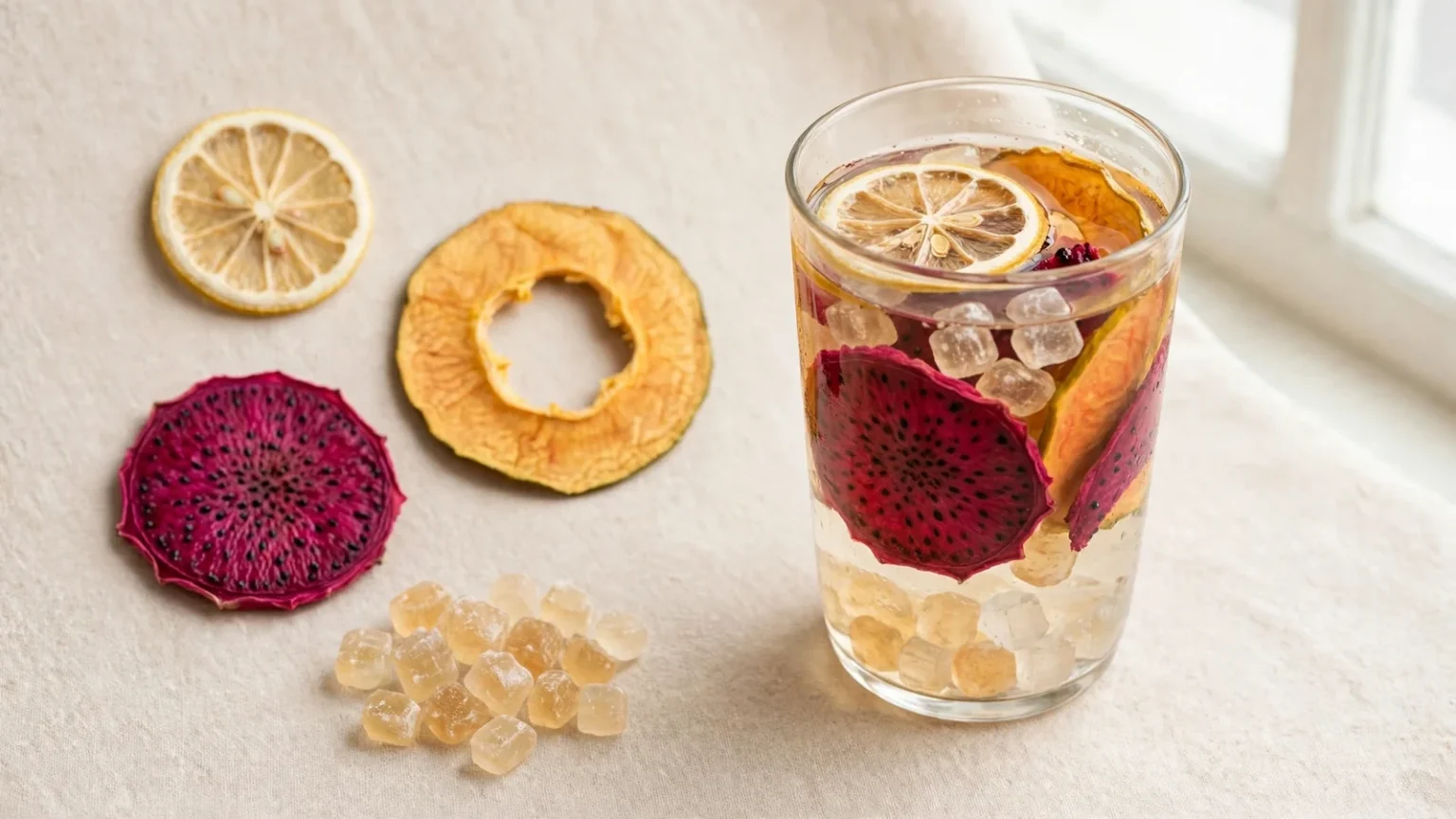
- Papaya Dragonfruit Glow is a mixed fruit infusion. Its published formula lists papaya, red dragon fruit, lemon and rock sugar. It contains no traditional tea leaves and is described by the brand as caffeine-free; it contains added sugar.
Why Can Drinks with the Same Name Taste Different?
A café drink, a green-tea recipe and a bag of mixed botanicals can create different expectations under the same fruit name. Before changing how you prepare a drink, identify what you actually bought.
In one Reddit question, a drinker wanted to identify a café’s dragonfruit iced tea bag. A green-tea discussion describes an individual’s experience of tea being more noticeable than dragon fruit. Another beginner’s question concerns a blend named Hibiscus Dragon Fruit Rosehip. These are individual questions, not a consumer survey or a comparative tasting.
If you want the café version, ask for its brand, product name and ingredients. A similar bag or cup color cannot identify the formula. If your drink contains green tea, steeping it longer will not turn it into pure dragon fruit juice. With a botanical blend, the fruit in the title does not explain every flavor you notice.
Read the Whole Formula: Base, Sweetness and Preparation
The examples below show different ingredient paths. They are not ranked by taste, and directions for one product should not be transferred to another.
| Example | Base and ingredients to recognize | Sweetness check | Preparation and evidence boundary |
|---|---|---|---|
| Monin Dragon Fruit Green Tea | Prepared green tea combined with dragon fruit syrup | Check the syrup and any other additions | Follow the original recipe. The ingredients do not establish caffeine or sugar grams per cup. |
| tealeavz Dragon Fruit Tea | A multi-ingredient fruit and botanical blend, including apple, rosehip and hibiscus, with dragon fruit flavoring and dragon fruit listed | Read the full label for sweeteners; a sweet flavor description is not a sugar declaration | Follow this blend’s directions. The maker describes it as caffeine-free; ingredient proportions are not established here. |
| CozySlip Papaya Dragonfruit Glow | Papaya, red dragon fruit, lemon and rock sugar; no traditional tea leaves | Rock sugar is already included | Open the clear serving pouch and use one complete serving according to the current label. Current-batch proportions and sugar grams are not available here. |
Monin’s original recipe illustrates the green-tea-and-syrup route. The tealeavz ingredient page illustrates a multi-ingredient blend. These examples establish different starting points, not a tested difference in the finished cups.
Read the label in this order: Is there a tea base or another caffeine source? Is dragon fruit present as fruit, juice, syrup, flavoring or a combination? What else is included? Is sugar already added? Finally, does the packaging need opening, or is it a filter bag designed for steeping? Packaging alone cannot answer the ingredient questions.
Why Can a Pink Cup Have a Light Dragon Fruit Flavor?
Separate the fruit’s outside from its flesh. UF/IFAS’s dragon fruit guide describes flesh that can be white, red or magenta, depending on the type. Similar-looking skins do not establish identical flesh or an identical finished drink.
Color and the flavor of a blend are different observations. A tea base, lemon, other botanicals and sweetening ingredients can all contribute to what you taste. Dragon fruit is described as a soft fruit layer in CozySlip’s product materials; that description does not promise a strong single-fruit taste. Nor does a darker pink cup tell you how much dragon fruit was used.
Lighting, backgrounds and editing can also change a product photograph’s appearance. Use pictures as context, then return to the ingredient list and your own tasting. For broader troubleshooting, see the fruit tea color guide or the guide to fruit tea that smells fruity but tastes light. Extending every steep simply to deepen the color is not a universal solution.
Papaya Dragonfruit Glow: One Complete Mixed Formula
Papaya Dragonfruit Glow lists papaya, red dragon fruit, lemon and rock sugar. It is a mixed fruit infusion, rather than pure dragon fruit tea or pure juice. The brand describes papaya as a mellow tropical layer, red dragon fruit as contributing rosy color and soft fruit character, lemon as a citrus edge, and rock sugar as sweetness. Those are product descriptions, not this author’s tasting results.
The listed formula has no traditional tea leaves, and the brand describes this product as caffeine-free. This is not a laboratory finding of exactly zero milligrams in a prepared cup. Rock sugar is included: the blend should not be described as unsweetened, sugar-free or low-sugar. We do not have verified sugar grams per cup.
Before preparing your first serving, compare the package in your hand with the published four-ingredient formula. Open the clear plastic serving pouch and transfer its contents into a suitable vessel. The plastic pouch is packaging, not a steepable filter bag; keep it out of the water. Use the complete serving and follow this product’s current label for water amount, temperature and time.
The public product materials describe cold and gently warm options, but the directions are not a current-batch test record. The fruit tea preparation guide is a further reference. If the package and webpage disagree, ask the brand to clarify before combining methods. No other brand’s brewing numbers are instructions for this serving.
How to Choose a Dragon Fruit Tea That Fits Your Expectations
If you want a recognizable tea character, look for the actual tea base. If avoiding caffeine matters to your choice, check the full label and the maker’s statement. Neither a pink color nor cold preparation answers that question.
If you want a strong, single-fruit flavor, ask how dragon fruit is used and what the other ingredients contribute. A mixed serving may suit you when you welcome the whole formula and prefer fewer separate preparation steps. Papaya Dragonfruit Glow fits that decision only if you want papaya, red dragon fruit, lemon and rock sugar together.
If your priority is pure juice, thick pulp, an unsweetened formula or a measured caffeine amount, look for information that specifically supports that requirement before buying. Choose by the complete formula first, then use appearance as another preference.
For a comparison with another single-fruit guide, see the passion fruit tea guide.
Frequently Asked Questions
Does dragon fruit tea have caffeine?
It depends on the formula. A version containing green tea should not be assumed caffeine-free. Papaya Dragonfruit Glow contains no traditional tea leaves and is described by the brand as caffeine-free; that is not a tested per-cup milligram result. See our fruit tea caffeine guide.
Is dragon fruit tea the same as dragon fruit milk tea or a Refresher?
No. Those drinks have their own formulas, potentially including milk, juice, tea or other ingredients. Similar names do not establish the same caffeine, sweetness or recipe. Check the specific drink’s full ingredients.
Why is the color strong when the dragon fruit flavor is light?
Color is not a flavor-strength measurement. Check the flesh type, other colored ingredients, tea base, other fruits and sweetness sources. Do not keep extending preparation only to chase a darker shade.
Does dragon fruit tea contain sugar?
Check both the formula and anything added during preparation. Papaya Dragonfruit Glow already contains rock sugar. Other versions may include syrup or another sweetener. Our fruit tea sugar guide and rock sugar label guide explain the distinction.
How should I understand a dragon fruit, hibiscus and rosehip blend?
Treat it as a complete blend. Do not attribute all acidity or an unfamiliar flavor to dragon fruit alone. Check the label, the maker’s flavor description and preparation instructions before deciding whether it matches your preference.
How can I choose a version closer to what I want?
Decide whether you want tea character, a single-fruit flavor or a convenient mixed infusion. Then compare the base, all ingredients, sweeteners and preparation steps. For a café match, ask the café for its brand and product name instead of searching by color alone.
Choose the Formula Before the Color
If papaya, red dragon fruit, lemon and rock sugar sound like the combination you want, check Papaya Dragonfruit Glow’s current ingredients and packaging directions. The useful starting point is the complete serving, with each ingredient understood as part of the blend.