

What Is Passion Fruit Tea?
Passion fruit tea is not one fixed recipe. It can mean fresh passion fruit pulp mixed with brewed tea, a flavored tea or herbal blend, or a fruit infusion containing dried passion fruit. To choose your cup, check the tea base, the form of passion fruit, other ingredients and any added sweetener before deciding how to prepare it.Key Facts at a Glance
- The name does not specify a recipe. Passion fruit tea can include pulp, flavoring, tea leaves or a combination.
- Packaging is not a tea base. A tea bag, loose blend or clear serving pouch does not establish the ingredients inside.
- Caffeine depends on the complete formula. Look for true tea and other caffeine sources rather than relying on the fruit name.
- Sweetness needs its own check. Rose Citrus Bloom includes rock sugar; it is not an unsweetened blend.
- Preparation is product-specific. Follow the directions for your ingredients, and never steep plastic serving packaging.
Why Can Two Passion Fruit Teas Taste Different?
One cup might feel close to a fruit drink, while another has a clear tea or herbal character. That difference does not necessarily mean you prepared it incorrectly. You may have started with different formulas.In one Reddit question, a drinker wanted alternatives with a similar juice-like character. Another discussion describes difficulty recreating a TAZO drink. These are individual questions, not a survey or evidence that everyone wants the same flavor.Before changing your steeping time, ask what you expected: visible fresh pulp, fruit aroma over tea, or a mixed fruit infusion? Then compare that expectation with the actual passion fruit tea ingredients. Our fruit tea ingredient guide explains how to read the complete blend beyond its name.What passion fruit tea tastes like
Passion fruit’s character is aromatic and tart, with a tropical scent that can suggest ripe guava or pineapple and a sharper, citrus-like edge on the tongue. In a cup, that combination can make the fruit smell sweeter than it actually tastes. If you enjoy a noticeable tang, passion fruit is a useful flavour to look for; if you prefer a softer fruit drink, the ingredients alongside it deserve a closer look.Lemon is a natural pairing when you want to lean into the tart side. Papaya or dragon fruit may offer a gentler backdrop, allowing passion fruit’s sharper character to stand out. These are pairing expectations based on the ingredients, rather than tasting results for a particular finished blend.For your first cup, smell the infusion before sipping, then notice whether the finish feels more tart or sweet to you. That simple comparison can help you decide whether to add sweetener next time or choose a different combination of fruits.Four Ways Passion Fruit Appears in Tea
These are useful preparation paths, not four exclusive categories. A product can combine fruit, herbs, true tea and flavoring. Its packaging alone cannot place it in one row.| Formula path | Tea base to check | Sweetness source to check | Preparation action |
|---|---|---|---|
| Fresh pulp plus brewed tea | The recipe’s black, green or other tea | Added sugar, syrup or sweetened pulp | Brew the specified tea and prepare the pulp using that recipe. |
| Fruit-flavored herbal blend | The complete botanical blend | Included sweetener and anything added later | Follow that blend’s directions; herbal products do not share one universal method. |
| Passion-fruit-flavored true tea | Black tea or another named true tea | Sweetener in the product or finished drink | Prepare for the specific tea base and maker’s instructions. |
| Portioned fruit blend containing passion fruit | Check whether tea leaves are included | Rock sugar or another listed sweetener | Open the serving packaging and use the complete contents as directed. |
Which Version Fits the Cup You Want?
If you want fresh pulp and control over each ingredient, start with a fresh-fruit recipe. You can choose the tea base and follow the author’s preparation steps. This path involves handling fruit and making tea separately; it is different from infusing a ready-portioned blend.If you want fruit aroma alongside a recognizable tea character, look for the named tea base. Read beyond “passion fruit” to see whether the blend includes actual fruit, flavoring or both. Choose its preparation method accordingly, rather than borrowing directions from a fruit-only infusion.If you want fewer preparation steps, consider a complete fruit serving containing freeze-dried passion fruit. It may suit you if you welcome citrus and floral ingredients together and prefer not to assemble several fruits for one drink.Freeze-drying removes water from frozen food through sublimation, as explained by Utah State University Extension. Here, its relevance is the dry ingredient format. It does not establish a nutritional advantage for the finished cup.Visible freeze-dried pieces are not fresh juice or a promise of thick pulp. They also should not be assumed to dissolve like an instant powder. If concentrated fruit texture is your priority, look for a pulp-based recipe instead. If you want no added sweetener, exclude blends with rock sugar or syrup before choosing by fruit format.Passion fruit in Cozyslip blends
For a fruit blend containing passion fruit, consider Papaya Dragonfruit Glow fruit tea. It combines papaya, dragon fruit, lemon and passion fruit. The passion fruit comes as small freeze-dried cubes, and each serving includes rock sugar in a separate small sachet, so you choose whether and how much to add.Across the Cozyslip range, we use a blend of freeze-dried and gently low-temperature-dried fruits. The confirmed freeze-dried passion fruit does not mean every fruit in this serving is freeze-dried. For processing and research questions, see our freeze-dried passion fruit science guide.Where Our Fruit-Tea Serving Fits
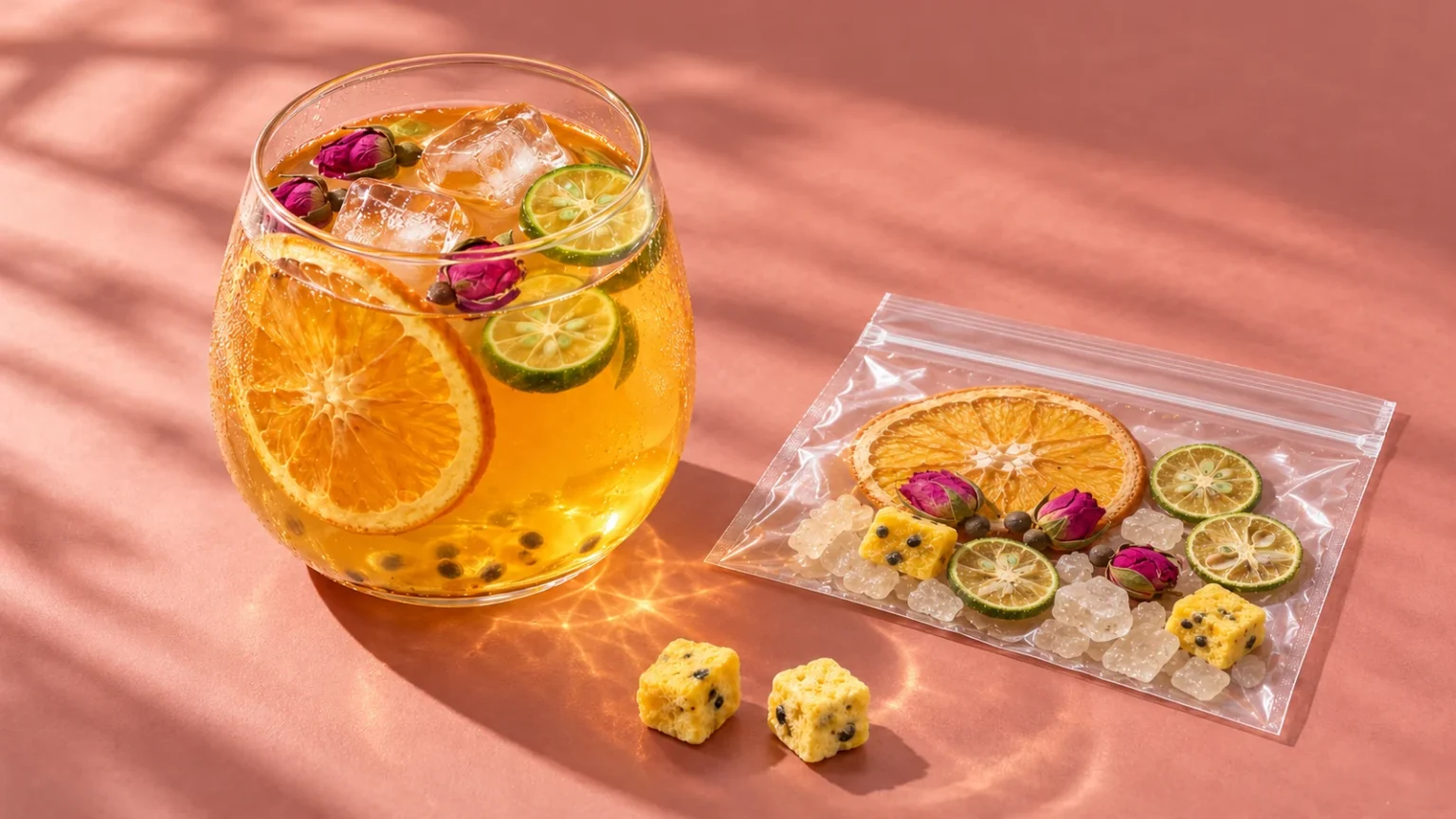
Rose Citrus Bloom Fruit Tea is a floral-fruit blend containing orange, calamansi, rose, passion fruit and rock sugar. Its product description identifies freeze-dried passion fruit. It is a mixed infusion, rather than pure passion fruit tea or a café-drink replica.The complete serving brings several ingredients together. That can be useful when you want less separate fruit preparation and accept a combined citrus, floral and tropical-fruit direction. This describes its formula and format, not a comparative tasting result.For your first serving:- Check the current package. Rock sugar is already included, so do not assume you are starting with an unsweetened base.
- Open the serving pouch. Transfer the contents to a clean cup or bottle. Keep both outer and inner plastic packaging out of the water.
- Follow this product’s directions. The public page specifies 200–300 ml of water per serving and offers cold and gently warm methods. Use the current package instructions for your product.
- Taste before adjusting. Judge the prepared blend on its own terms rather than extending the steep to imitate thick fresh pulp.
How to brew passion fruit tea
For Cozyslip’s Papaya Dragonfruit Glow, use one serving per 200–300 ml of water. The methods below apply to this fruit blend; follow the specific recipe or package directions for passion fruit drinks made with tea leaves or fresh pulp.Cold brew, including overnight preparation
- Open the serving packaging and put the fruit into a clean cup or bottle. Keep the plastic packaging and the separate rock-sugar sachet out of the water.
- Add 200–300 ml of cold water per serving and refrigerate.
- Cold brew for at least 1 hour; for best results, allow 3 hours or longer. You can also prepare it the night before and leave it refrigerated overnight.
- Taste, then choose whether to add any of the separately packed rock sugar. Add as much or as little as you prefer, or leave it out.