

What Is Rock Sugar in Tea? A Fruit Tea Label Guide
Steep. Sip. Slip into your mood.
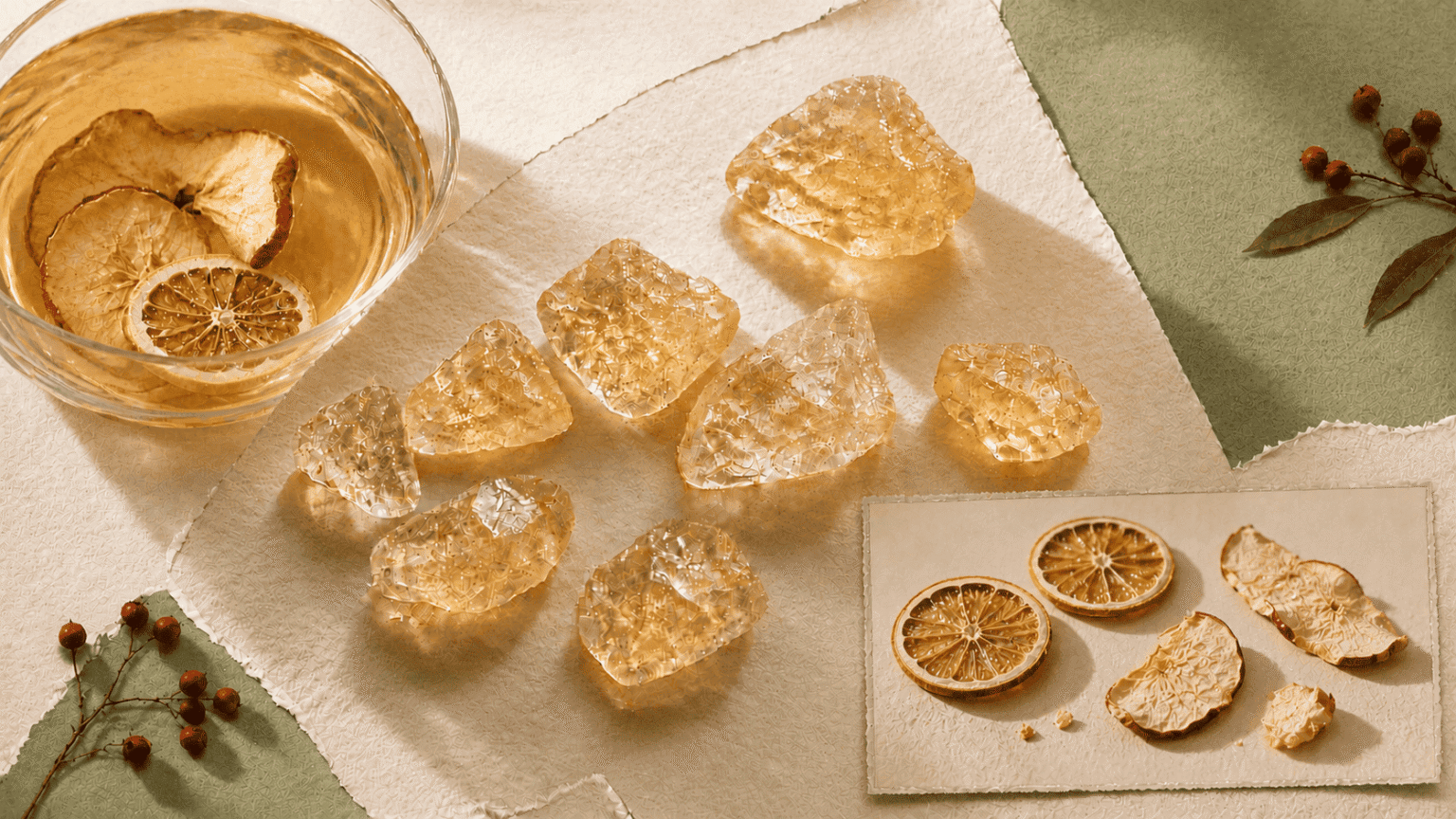
Rock sugar in tea is simply sugar that has been crystallized into larger, hard pieces. It works as a sweetener, and when it is included in a fruit tea blend, it still counts as an added sugar. The larger crystal format can affect how quickly it dissolves—especially in cold water—but it does not make the sugar calorie-free, sugar-free, or inherently healthier than granulated sugar.
That distinction matters when you are looking at a colorful fruit tea. Visible fruit pieces can make the drink feel very different from a bottled soda or spoon-sweetened iced tea, but the only reliable way to understand the formula is to read the complete ingredient list and the applicable Nutrition Facts label.
Rock Sugar in Tea: Key Facts
- Rock sugar is crystallized sugar, sometimes called rock candy or sugar candy.
- Its larger pieces may take longer to dissolve than fine granulated sugar.
- Water temperature, crystal size, time, and stirring all affect dissolution.
- If rock sugar is added to a tea blend, it is an added sweetening ingredient.
- “Rock” describes the crystal form, not a separate health category.
- Not every fruit tea contains rock sugar; check the specific product.
What Is Rock Sugar?
Rock sugar is made by allowing a concentrated sugar solution to form large crystals. Depending on the product and process, the pieces may look clear, white, pale amber, or golden. The crystals can be irregular chunks, smaller gems, or pieces grown around a stick.
The name can create confusion. “Rock sugar” does not mean a mineral sweetener, and it does not mean that the sugar came naturally from the fruit shown on a package. In most food contexts, it is a crystalline form of sugar used in drinks, desserts, syrups, and savory cooking.
You may also see the terms rock candy, sugar candy, crystal sugar, or local names connected with particular tea traditions. Those products are not automatically identical: color, flavoring, crystal size, and the original sugar can vary. For a packaged fruit tea, use the ingredient name and label information for that exact product rather than relying on a general cultural name.
Rock Sugar vs. Granulated Sugar
The most visible difference is physical form. Granulated sugar comes in many small crystals with much more surface area exposed to water. Rock sugar comes in larger, denser pieces. That difference can change how the sweetener behaves in a cup.
| Question | Rock sugar | Granulated sugar |
|---|---|---|
| Form | Large, hard crystals or chunks | Small, loose crystals |
| Dissolving | May take longer, especially in cool water | Usually dissolves faster under the same conditions |
| Measuring | Irregular pieces can make spoon estimates inconsistent | Easier to level and measure by volume |
| Sugar status | Sugar and an added sweetener when added to a blend | Sugar and an added sweetener when added to a blend |
| Health meaning | Crystal size does not prove a health advantage | Familiar format, but still an added sugar when used as a sweetener |
Descriptions such as “cleaner,” “gentler,” or “less sweet” are often subjective. A large crystal may dissolve gradually, so sweetness can seem to develop differently over time. That sensory experience does not establish that the finished drink contains less sugar. The amount in the serving is a separate question from the speed at which the crystals disappear.
Why Does Rock Sugar Appear in Fruit Tea?
In a fruit tea blend, rock sugar has a straightforward role: it contributes sweetness. Large visible crystals can also fit an individually packed serving where fruit pieces, botanicals, and a sweetener are portioned together.
This format can be convenient because the drinker does not need to begin by adding a separate spoonful of sugar. It also means you should taste the prepared tea before adding another sweetener. A blend that looks like mostly fruit may already include sugar in the serving.
Rock sugar does not “neutralize” fruit acidity in a chemical or medical sense simply because the drink tastes less tart. Sweetness can change the way sourness is perceived, but flavor balance is not a pH measurement and does not turn a sweetened drink into a health treatment.
Does Rock Sugar Count as Added Sugar?
Yes—when rock sugar is included in a product to sweeten it, consumers should understand it as an added sugar ingredient. The U.S. Food and Drug Administration explains that added sugars include sugars added during processing, including sucrose and other sweeteners. Total Sugars includes both naturally occurring and added sugars, while the Added Sugars line identifies the portion added to the food when that declaration applies.
That is why the ingredient list and Nutrition Facts panel answer different parts of the question:
- The ingredient list tells you whether rock sugar or another sweetening ingredient is part of the formula.
- The serving size tells you what amount the nutrition information describes.
- Total Sugars combines naturally occurring and added sugars in the serving.
- Includes Added Sugars identifies the added-sugar contribution when shown on the label.
Do not use the presence of real fruit to conclude that a product is unsweetened. Conversely, do not assume that every fruit tea contains added sugar. Our broader guide explains whether fruit tea has sugar and how to check.
How Rock Sugar Behaves in Hot and Cold Water
Sugar dissolves when its molecules move from the crystal into the surrounding liquid. Warm water generally speeds that process, while cooler water slows it. Smaller crystals also tend to disappear faster than large pieces because more surface is exposed to the water.
For rock sugar in tea, four practical variables matter:
- Water temperature: warmer water usually dissolves sugar faster.
- Crystal size: one large piece may take longer than several smaller pieces.
- Movement: gentle stirring or swirling brings fresh liquid into contact with the crystal.
- Time: a refrigerated infusion can continue changing as the sugar dissolves.
This does not create one universal cold-brew time. Fruit tea formulas, serving sizes, water volumes, and crystal sizes vary. Follow the directions for the exact blend. If you are making cold-brew fruit tea, check the bottom of the container before deciding that all of the sweetness has entered the drink.
How to Read a Fruit Tea Label
The front of a package may focus on strawberries, citrus, flowers, or a bright cup. Use the back or product-detail information to answer the practical questions.
1. Read the complete ingredient list
Look for rock sugar, sugar, cane sugar, syrup, honey, or another listed sweetener. Ingredients are different from flavor names and serving suggestions. Our guide to reading a fruit tea ingredient list explains the other categories to check, including fruit, botanicals, and true tea.
2. Check the serving size
Nutrition numbers only make sense in relation to the labeled serving. Do not compare two products only by the size of their bags or the appearance of the dry ingredients.
3. Compare Total Sugars and Added Sugars
Fruit ingredients may contribute naturally occurring sugars, while rock sugar contributes added sugar. The applicable Nutrition Facts panel is more useful than guessing from taste or color.
4. Follow the preparation directions
A sweetener included in a cold preparation may dissolve gradually. Use the instructed water volume and time, and stir or swirl only when the product directions allow it.
5. Taste before adding more
If the serving already includes rock sugar, prepare it as directed before adding honey, syrup, or another spoonful of sugar. This is a flavor-control step, not a nutrition claim.
Where Rock Sugar Fits in Cozyslip Fruit Tea
Cozyslip’s current six freeze-dried fruit tea blends list rock sugar in their ingredients. The formulas are not otherwise identical: some pair fruit with flowers or herbs, while Apple Orange Ember includes a separate black tea bag and therefore contains caffeine.
That is why “fruit tea” alone cannot answer questions about sugar or caffeine. Read the exact blend’s current information, then choose the flavor and preparation method that fit the occasion. You can compare the current freeze-dried fruit tea collection after reviewing the ingredient details.
The Practical Answer
Rock sugar is not a mystery ingredient or a wellness shortcut. It is crystallized sugar used as a sweetener. Its large pieces can dissolve differently from granulated sugar, particularly in cold water, but crystal size does not remove calories or added-sugar status.
For any fruit tea, use this order: read the ingredient list, check the serving and Nutrition Facts information, follow the preparation directions, and taste the finished drink before adding anything else.
Rock Sugar in Tea FAQ
Is rock sugar the same as regular sugar?
It is a form of crystallized sugar. The crystal size and appearance differ from granulated sugar, but rock sugar is still sugar and functions as a sweetener.
Is rock sugar healthier than white sugar?
There is no good basis for treating the crystal form alone as a health advantage. Avoid assuming that pale amber color, large crystals, or traditional use makes it sugar-free, low-calorie, or suitable for a medical diet.
Does rock sugar count as added sugar?
Yes, when it is added to a tea blend as a sweetener. Check the ingredient list and the applicable Added Sugars information for the labeled serving.
Why does rock sugar dissolve slowly in cold tea?
Cooler water slows dissolution, and large crystals expose less surface area relative to many small crystals. Time and gentle movement can change how quickly the sweetness disperses.
Can rock sugar be used in iced or cold-brewed tea?
Yes, but it may dissolve gradually. Follow the recipe or product instructions rather than assuming the same timing works for every crystal size and water volume.
Does every fruit tea contain rock sugar?
No. Fruit tea is a broad category. Some blends are unsweetened; others use rock sugar, cane sugar, syrup, honey, or another sweetener. Read the exact product label.
Sources
- FDA: Added Sugars on the Nutrition Facts Label
- FDA: How to Understand and Use the Nutrition Facts Label
- FDA: Types of Food Ingredients
- Just One Cookbook: Rock Sugar
This article provides general ingredient and label-reading information. It does not provide medical advice or verified sugar quantities for an individual Cozyslip serving.