

How to Store Fruit Tea: Dry Blends, Brewed Tea, and Best-By Dates
Steep. Sip. Slip into your mood.
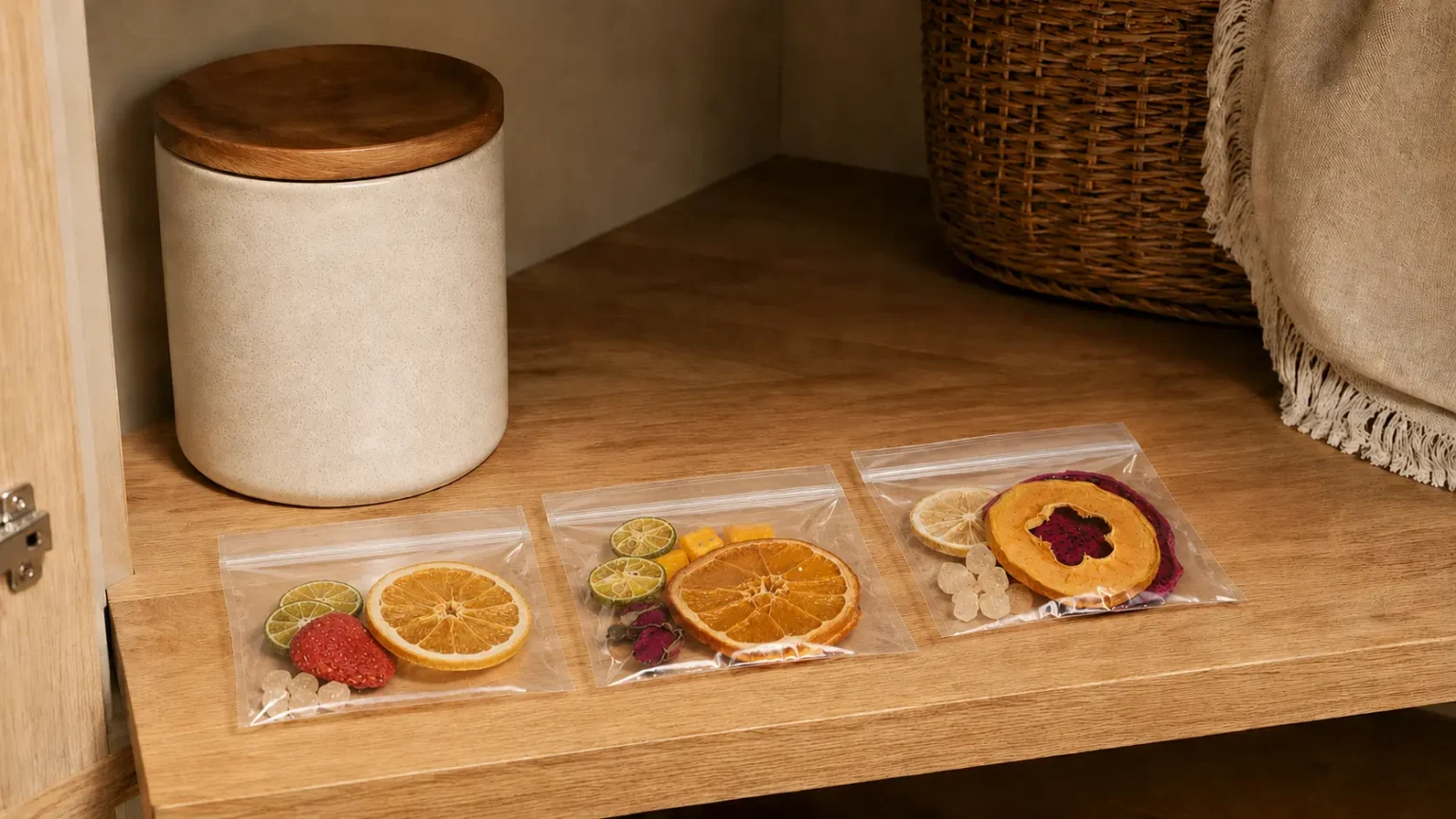
How to store fruit tea depends on whether it is still dry or has already been brewed. Keep unopened and dry fruit tea sealed in a cool, dark, dry place away from steam and strong odors. Once brewed—especially when rehydrated fruit pieces or fresh additions remain in the drink—keep it covered and refrigerated at 40°F (4°C) or below, and follow the product’s own storage directions.
The Short Answer
For dry fruit tea, protect it from five things: moisture, heat, light, air, and strong odors. For prepared fruit tea, use a clean covered container and refrigerate it promptly. The package date and product-specific instructions are more reliable than a universal shelf-life number.
Key Facts at a Glance
- Moisture is the first storage risk for a dry fruit-tea blend.
- A dark cabinet away from the stove, sink, dishwasher, and sunny windows is usually a better location than an open counter.
- Tea can absorb nearby odors, so keep it separate from spices, coffee, cleaners, and strongly scented products.
- Refrigerating dry tea can introduce condensation when the package is opened.
- Prepared fruit tea and dry fruit tea require different storage decisions.
- A “Best if Used By” date generally describes quality, not one universal safety cutoff.
How Should You Store Dry Fruit Tea?
Keep dry fruit tea in its intact original packaging or a clean, dry, food-safe container with a reliable closure. Store it in a cabinet with a stable room temperature, away from steam, direct sunlight, and strong smells.
| Storage factor | Why it matters | Better choice |
|---|---|---|
| Moisture | Dry fruit and botanicals can absorb humidity; visible dampness or mold is a reason to discard the product. | Use a fully dry container and close it immediately after opening. |
| Heat | Repeated heat can accelerate flavor and aroma loss. | Choose a stable cabinet away from ovens and heating vents. |
| Light | Direct light can reduce color and aroma quality over time. | Use the original outer package or an opaque cabinet. |
| Air | Frequent exposure can flatten aroma. | Keep the package closed and avoid unnecessary transfers. |
| Odors | Tea and dried ingredients can pick up surrounding smells. | Separate tea from spices, coffee, detergents, and scented products. |
Where Should You Not Store Fruit Tea?
- Above the kettle or stove: steam and temperature changes work against dry storage.
- Beside a sink or dishwasher vent: these areas can be humid.
- On a sunny windowsill: the package receives direct light and heat.
- Next to strongly scented foods or cleaners: the blend may absorb odors.
- In the refrigerator by default: dry tea can be exposed to condensation and food odors when moved in and out.
Harvard T.H. Chan School of Public Health identifies light, heat, moisture, odor, and air as the five elements to avoid when keeping tea fresh. Its guidance also advises against routinely refrigerating or freezing dry tea because introduced moisture can degrade it.
How Do Individually Packed Fruit Tea Servings Help?
Individually packed servings reduce how often the rest of the product is exposed to room air. Cozyslip’s current fruit-tea format uses individual inner servings inside an outer package. Keep the unused servings sealed inside the closed outer package until needed.
Once an inner pouch is opened, prepare that complete serving according to the current product directions. The transparent serving pouch is packaging, not a brewing container. If a seal is damaged, the contents are damp, or the product shows mold, insects, or an unexplained off odor, do not brew it.
Does Fruit Tea Expire?
There is no single shelf-life number for every fruit tea. Formulas can include different dried fruits, flowers, herbs, true tea, sweetening ingredients, and packaging systems. Read the exact package date and storage directions rather than borrowing a date from another blend.
The U.S. Food and Drug Administration and U.S. Department of Agriculture recommend “Best if Used By” as a quality-based date phrase: quality may decline after that date, but the phrase is not automatically a universal safety cutoff. This does not mean every old or damaged product should be used. Discard a product with moisture damage, mold, pests, a broken seal, or suspicious odor or appearance, and follow any stricter label instruction.
If you are unsure what the visible ingredients mean, read our fruit tea ingredient guide.
How Should You Store Brewed Fruit Tea?
- Start clean. Use a clean bottle, cup, lid, and utensil.
- Keep it covered. A lid helps limit contamination and refrigerator odors.
- Refrigerate promptly. Keep prepared drinks that require refrigeration at 40°F (4°C) or below.
- Use the product directions first. If a label gives a shorter storage window, follow it.
- Discard when uncertain. Mold, an unexpected odor, a damaged container, or unknown time at warm temperatures is a reason not to drink it.
The FDA’s general food-safety guidance uses a two-hour rule for foods and prepared items that require refrigeration, reduced to one hour when the surrounding temperature is above 90°F (32°C). Apply that conservative rule to fruit tea containing rehydrated fruit or fresh perishable additions when the product label does not provide stricter guidance. This is general safety guidance, not a Cozyslip-specific shelf-life claim.
Can You Leave Fruit Pieces in Brewed Tea?
Follow the product directions. Leaving rehydrated fruit pieces in the drink may continue to change flavor and texture. If the prepared tea will not be consumed promptly, keep it covered and cold rather than leaving it on a desk or counter. Do not move used wet ingredients back into the original dry package.
For refrigerator preparation, use our cold brew fruit tea guide. For commuting and desk storage, see three ways to make iced fruit tea at work.
A Five-Step Fruit Tea Storage Check
- Is the product still dry and the seal intact?
- Is it stored away from steam, heat, sunlight, and strong odors?
- Does the exact package provide a Best By or storage instruction?
- After brewing, was it covered and refrigerated promptly?
- Is there any mold, unexpected odor, moisture damage, pest activity, or container damage?
Frequently Asked Questions
Should dry fruit tea be refrigerated?
Usually not by default. A cool, dark, dry cabinet is often better because moving dry tea into and out of a refrigerator can introduce condensation and food odors. Follow the package if it specifically requires refrigeration.
Does fruit tea expire?
Fruit tea does not have one universal shelf life. Use the date and storage directions on the exact package, and discard products with moisture damage, mold, pests, a broken seal, or an unexplained off odor.
How should I store fruit tea after opening it?
Close the original package tightly or use a clean, dry, food-safe container. Keep it away from moisture, heat, light, air, and strong odors. For individually packed tea, leave unused inner servings sealed.
How should brewed fruit tea be stored?
Use a clean covered container and refrigerate it promptly at 40°F (4°C) or below. Follow any product-specific storage direction and discard the drink when its time at warm temperatures is unknown.
Can I put wet fruit pieces back into the dry tea package?
No. Keep wet, used ingredients separate from the remaining dry product. Introducing moisture into the dry package can damage the unused servings.
Keep Each Serving Dry Until You Are Ready to Brew
Good storage is simple: keep dry fruit tea sealed, cool, dark, dry, and separate from strong odors; keep prepared tea covered and cold. Browse the Cozyslip Fruit Tea collection, then use the date and preparation directions for the specific serving you choose.