

What Is Freeze-Dried Fruit Tea?
Steep. Sip. Slip into your mood.
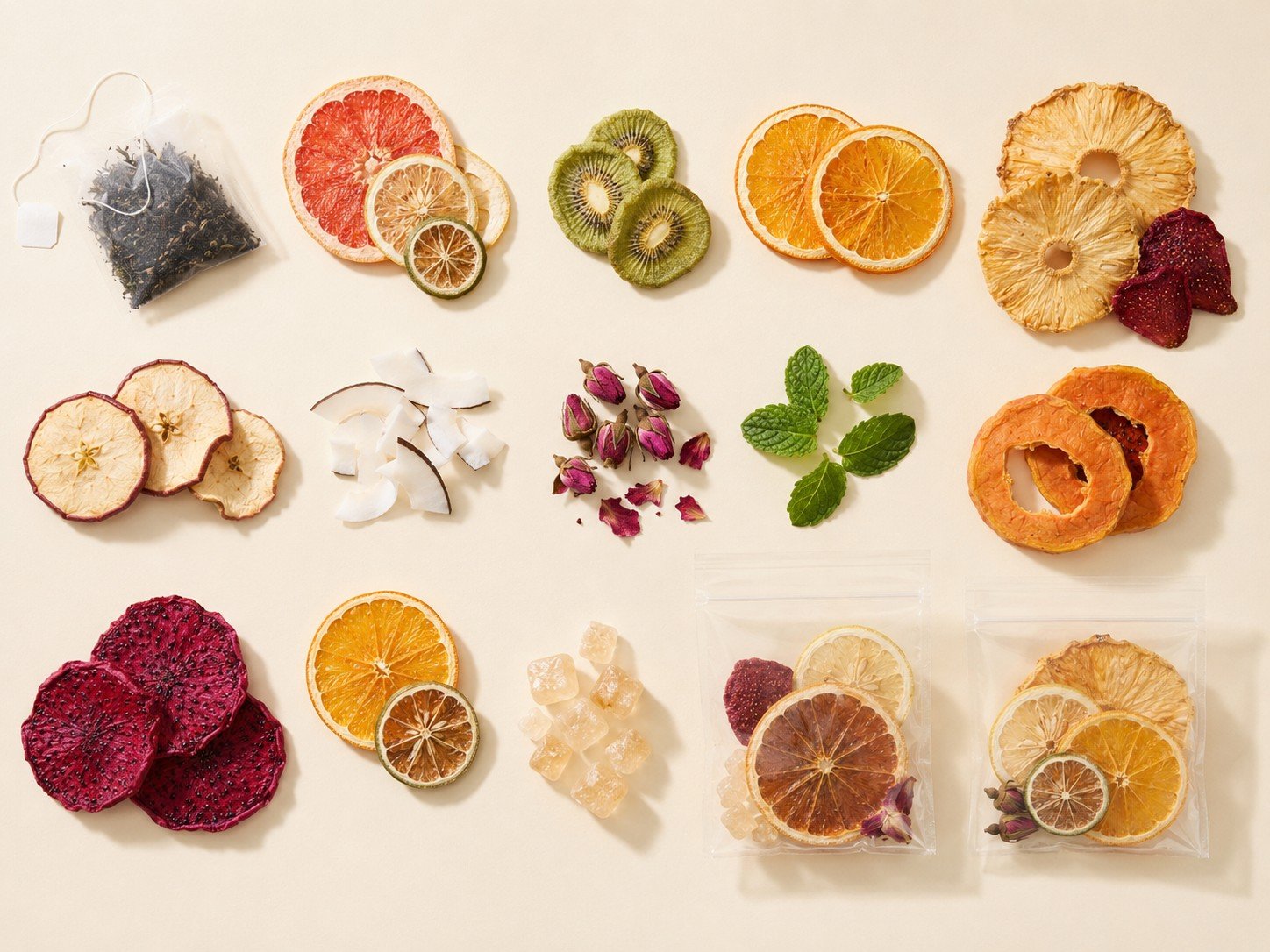
Freeze-dried fruit tea is a drink made by infusing freeze-dried fruit—sometimes with flowers, herbs, true tea leaves or a sweetener—in water. It is a flexible product format rather than one universal recipe, so two packages with the same “fruit tea” name can taste very different and may not have the same caffeine content.
The easiest way to understand a blend is to look beyond the picture on the front. Read the ingredient list, notice whether the package contains visible fruit pieces or a separate tea bag, and follow the brewing directions written for that specific serving.
What Does “Freeze-Dried” Mean?
Freeze-drying is a dehydration method. Food is frozen, and its ice is removed as vapor through a process called sublimation. The result is lightweight fruit with much of its original shape, color and aroma still recognizable.
In a fruit tea blend, those pieces rehydrate as they sit in water and gradually release flavor and color into the cup. The phrase “freeze-dried fruit tea” describes the ingredient format; it does not tell you everything about sweetness, caffeine or the amount of real tea in the blend.
Freeze-Dried Fruit Tea vs. Dried Fruit Tea vs. Fruit-Flavored Tea
These names can sound similar, but they do not always describe the same cup.
- Freeze-dried fruit tea uses fruit that was frozen before its water was removed. The pieces are often light, porous and easy to recognize.
- Conventionally dried fruit tea may use air-dried or heat-dried fruit. Its texture, color and steeping behavior can differ.
- Fruit-flavored tea may begin with black, green, white or oolong tea and add fruit flavor. It may contain little visible fruit—or none at all.
- Fruit infusion is a broad term for a drink steeped from fruit, flowers, herbs or spices, with or without true tea leaves.
None of these names alone tells you whether the product contains caffeine or added sweetener. That is why the ingredient list matters.
Read the Ingredient List Before You Choose
In the United States, packaged-food ingredients are generally listed from the greatest amount by weight to the smallest. Reading the list helps you answer four useful questions.
1. Which fruits are actually included?
Look for specific names such as freeze-dried grapefruit, apple, pineapple or dragon fruit instead of relying only on a flavor name or front-of-package image.
2. Does the blend include true tea?
Black, green, white and oolong tea come from the tea plant and naturally contain caffeine. A blend made only with fruit, flowers or caffeine-free herbs can be different—but always verify the actual ingredients.
3. Is a sweetener already included?
Some blends are unsweetened, while others contain rock sugar or another sweetener. Knowing this before brewing helps you avoid automatically adding more.
4. Are flowers, herbs or spices part of the flavor?
Rose can add a floral edge, mint can make a cup feel fresh, and citrus peel or slices can add brightness. These supporting ingredients often explain why two fruit blends taste very different.
Does Freeze-Dried Fruit Tea Have Caffeine?
The freeze-dried fruit itself does not answer the caffeine question. Caffeine depends on the rest of the formula.
A blend containing black, green, white or oolong tea contains caffeine. A fruit-and-herb blend may be caffeine-free, but the safest habit is to check the ingredient list instead of assuming that every product called fruit tea is caffeine-free.
For a closer ingredient-by-ingredient explanation, read our guide: Does Fruit Tea Have Caffeine?
A Flavor Map of Cozyslip’s Freeze-Dried Fruit Teas
Cozyslip’s six current fruit tea blends all use visible freeze-dried fruit, but each one takes a different direction.
Rose Citrus Bloom: citrus and floral
Freeze-dried orange, calamansi and passion fruit meet rose petals and rock sugar. Choose this when you want a bright citrus profile with a floral finish. Explore Rose Citrus Bloom.
Grapefruit Mint Lift: crisp and minty
Freeze-dried grapefruit and lemon pair with mint tea and rock sugar for a fresh, citrus-led cup. Explore Grapefruit Mint Lift.
Papaya Dragonfruit Glow: colorful and tropical
Papaya, red dragon fruit and lemon create a vivid fruit-forward infusion with rock sugar already included. Explore Papaya Dragonfruit Glow.
Apple Orange Ember: fruit with real black tea
This blend combines freeze-dried apple, orange and lime with black tea and rock sugar. Because it includes black tea, it contains caffeine and has a more tea-forward character. Explore Apple Orange Ember.
Strawberry Pineapple Coconut Breeze: soft tropical layers
Freeze-dried pineapple, lemon, strawberry and coconut create a rounded tropical profile with rock sugar. Explore Strawberry Pineapple Coconut Breeze.
Kiwi Citrus Fruit Party: lively citrus fruit
Freeze-dried pineapple, grapefruit, orange and kiwi make this the broadest citrus-fruit combination in the collection. Rock sugar is included. Explore Kiwi Citrus Fruit Party.
How to Choose the Right Blend
Start with the experience you want from the cup.
- For a tea-forward cup with known caffeine: choose Apple Orange Ember.
- For fresh mint and grapefruit: choose Grapefruit Mint Lift.
- For citrus with a floral edge: choose Rose Citrus Bloom.
- For a vivid tropical cup: choose Papaya Dragonfruit Glow.
- For softer pineapple, strawberry and coconut notes: choose Strawberry Pineapple Coconut Breeze.
- For a lively mix of kiwi and citrus fruits: choose Kiwi Citrus Fruit Party.
You can also compare the full fruit tea collection before choosing.
How to Prepare Freeze-Dried Fruit Tea
Brewing directions vary with serving size and formulation, so follow the instructions for your product. For Cozyslip’s individually packed fruit tea servings, use either of these starting methods.
Cold method
- Add one serving to a clean, covered glass or bottle.
- Add 200–300 ml cold drinking water.
- Refrigerate for about one hour.
- Stir gently, taste and extend the steep if you prefer a stronger cup.
See the full one-hour cold-brew fruit tea guide.
Gently warm method
- Add one serving to a cup.
- Pour in 200–300 ml water below 60°C / 140°F.
- Steep for about five minutes.
- Taste before adding anything else because the serving already includes rock sugar.
For more serving ideas, see three colorful fruit tea rituals.
Frequently Asked Questions
Is freeze-dried fruit tea the same as instant tea?
Not necessarily. Instant tea usually dissolves into water, while many freeze-dried fruit tea products contain visible pieces that infuse and rehydrate. Check the package format and directions.
Is all freeze-dried fruit tea caffeine-free?
No. Caffeine depends on whether the blend includes true tea such as black, green, white or oolong tea. Read the ingredient list for each product.
Does freeze-dried fruit tea contain sugar?
It depends on the formula. Some products are unsweetened and others include a sweetener. Cozyslip’s current six fruit tea blends list rock sugar in their ingredients.
Can I cold brew freeze-dried fruit tea?
Often yes, but use the ratio and timing recommended for the product. Cozyslip’s individual servings are designed to start with 200–300 ml cold water and about one hour in the refrigerator.
A Clearer Cup Starts With the Ingredients
“Freeze-dried fruit tea” tells you how part of the blend was prepared, but the ingredient list tells you what you will actually drink. Check the fruits, true tea, herbs and sweetener; then choose the flavor and brewing method that fit your moment.
Explore Cozyslip’s freeze-dried fruit tea collection and compare all six blends.